
Barcelona is such a tourist destination. We see the signals EVERYWHERE. You don’t need to live 10 minutes away from Sagrada Família or Passeig de Gràcia to identify people from all over the world: queuing at Gaudí monuments, a luxury store implementing some dumb marketing strategy, or at Sips Bar, the number one cocktail bar in the world.
When I walk my dog, I try not to use my phone and instead look around, observe, and find the brain connections that free me from always being connected to a device or a work task. I try to think with my own brain and look for inspiration, something that nowadays feels harder and harder to get, we can’t pay attention and how to think deeply again (we are screwed!).
My intro was meant to introduce a signal of what Barcelona has become in recent years, something you can even see in the traditional newspaper kiosks around the city.
Older Kiosks vs. New-Generation Kiosks.
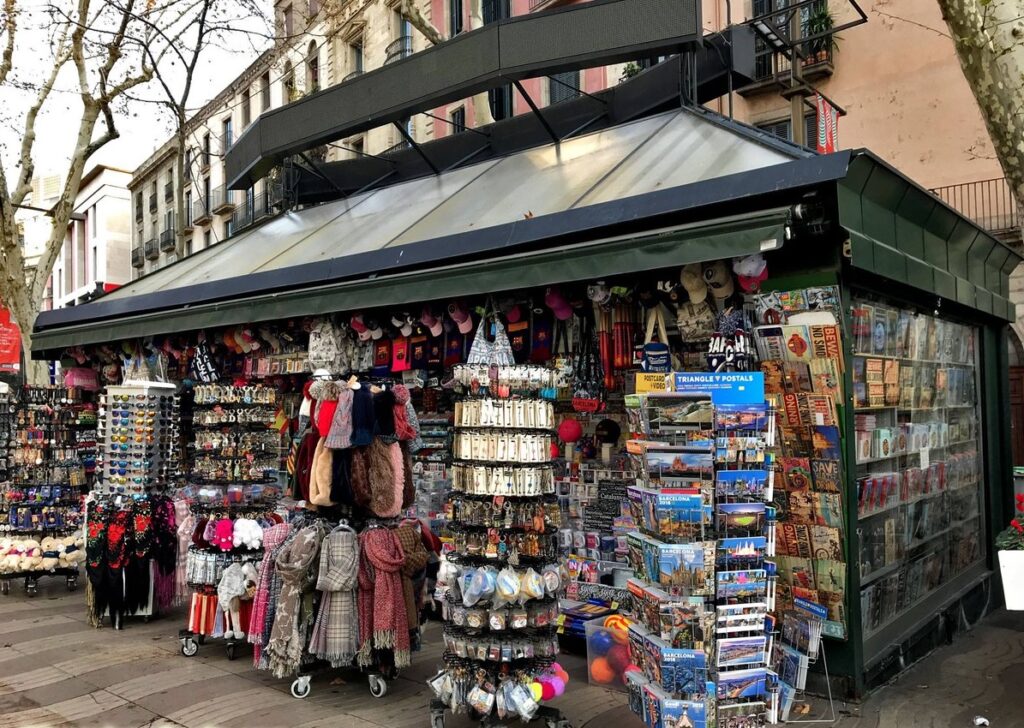
And the more I paid attention, the more I realised something interesting: kiosks in Barcelona have quietly split into two very different worlds. What used to be a simple, almost-commodity service selling newspapers, magazines, or a bottle of water has — dramatically — evolved into something completely non-sense and ridiculous in some cases. Some kiosks stayed exactly as they were and then slowly turned into these chaotic “La Rambla stalls,” piling up anything they think a tourist might buy: sangria bottles in ugly plastic bull-shaped bottles, flamenco fridge magnets, fake Barça shirts, “I ❤️ Barcelona” mugs that might end up on another random shelf… basically a wall of randomness. They try to appeal to everyone, and end up speaking to NO ONE.
But then there are kiosks like The Rocks and The Good News (Barcelona startups, by the way, deserving a proper mention) that went in the opposite direction: they transformed, specialized, and started targeting a very specific archetype of customer. Same city, same footprint, same square meters… but two completely different ways of reaching a younger urban audience that wants design and lifestyle magazines, specialty coffee served from a Marzocco machine, kombucha, and similarly curated products. All done in beautifully redesigned spaces — minimalistic, and actually pleasant to look at.
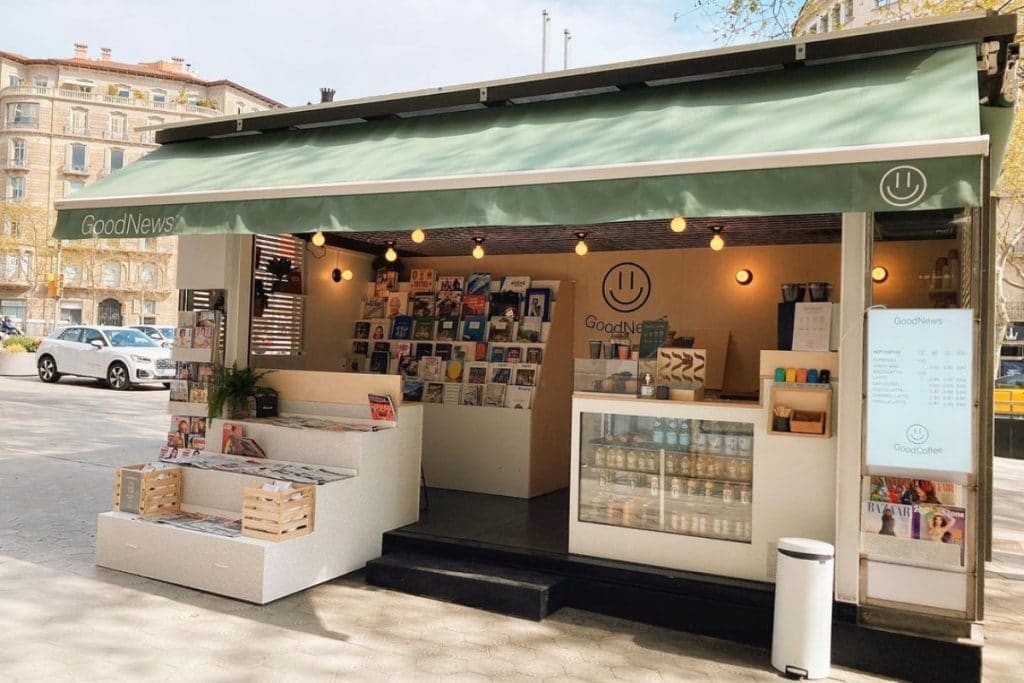
- Clean shelves.
- Clear product selection.
- Things arranged with purpose.
- Only what matters.
- Everything visible without effort.
You instantly understand what they offer. You instantly know if they have something for you. Same location, same square meters, but a completely different experience.
And suddenly I realized: “This is EXACTLY what is happening in the domain industry in the Registry <> Registrar channel!”
The 3 Truths About Today’s Domain Industry
When you look at the Registrar–Registry channel through this kiosk lens, three things become obvious:
- Distribution is concentrated: a few Registrars control most of the visibility.
- MDF impact is unclear: generic homepage promos provide almost no measurable insight.
- Registrants (mostly SMBs) don’t find their proper TLDs: most never discover the extensions built for their niche.
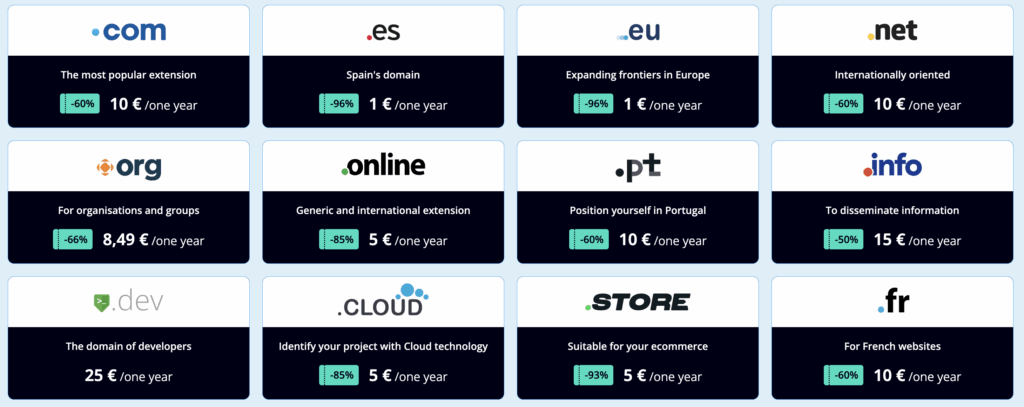
Most Registrars still operate like the old kiosks: they throw every TLD, every discount, and every promo onto the shelf at the same time, hoping something sticks. The result is noise, not discovery. The meaningful options are there, of course, but they’re buried under layers of banners, search placements, and bundles that speak to no one in particular, relying on high but unqualified website traffic, hoping for the best CTR and crossing fingers for renewals next year.
And this is where the system really breaks: when everything is pushed to everyone, the Registrant journey becomes completely disconnected from how TLDs are presented. It’s the old kiosk logic at scale, plenty of products, but no real relevance. And once Registrars rely on generic promotions, the same issues always show up:
- Misaligned funnels — promos don’t match Registrant intent.
- Irrelevant visibility — placement drives exposure, not relevance.
- Visibility overload — too many offers make niche TLDs disappear.
- Unclear ROI on MDF — no one knows who engaged or why.
Even with great TLDs on the shelf, the way they’re displayed makes true discovery nearly impossible.
Why the Next gTLD Round Can’t Repeat 2012 Mistakes
The renewal data from the last new gTLD round says it all. After more than a decade, the market still behaves exactly like an overcrowded kiosk: lots of first-year registrations, very little long-term value when we look at the numbers based on the Verisign DNIB Q3 2025 Report:
- New gTLDs: ~32% renewal rate
- Legacy gTLDs (.com/.net): ~75%
- Other legacy gTLDs: up to 82%
- Major ccTLDs: 72–82% (.ru ~72%, .fr ~82%).
Another proven pattern is the relatively low market share between new and legacy TLDs. Even after more than a decade of steady growth, new gTLDs still represent only around 10% of global domain registrations, far behind legacy gTLDs (~60%) and ccTLDs (~30–40%).
Two-thirds of new gTLD registrations vanish after year one because most Registrants never understood why they should keep them. Many were registered for free in bundles or at extremely low prices during onboarding, often paired with .com or .net. And with another new gTLD round coming in 2026, some Registrars are openly saying they won’t repeat the 2012 experience. Michele Neylon from Blacknight said recently on Domain Name Wire:
‘’We won’t onboard any new TLDs unless the value is incredibly compelling and the backend is already integrated. We haven’t been able to convince people and businesses in any serious volumes to try new domain extensions.’’
Looking At The Future As ‘Go To Market Engineers’
The lesson is straightforward: presenting everything to everyone leads to registrations without relevance nor real value, and I believe it is what ultimately drives renewal, unless new gTLDs are generic enough or territorial TLDs, from high potential geographical areas – Kudos to the ones who ‘made it’ in the Top10, by the way, but…. at what cost? –. For ‘niche’ existing (.casa, .law, .press or .dog), and next round of new TLDs there should be a new beginning for their Go-To-Market strategies, rather taking a data-driven approach, understanding the potential Registrant base and then doing a proper hyper-customized, contextualized outreach at the right momentum.
Registrars and Resellers who behave more like GoodNews or The Rocks kiosks, the ones who present only what’s relevant for a specific kind of customer, create a completely different registration experience. Same catalogue, same space, same opportunity, but a radically different level of clarity and traction. Unfortunately though, you don’t see many of them using this approach, but there are already signs proving the shift.
And once you compare the two models, the difference becomes painfully obvious:
- Noise ≠ discoverability — showing everything means nothing stands out.
- Relevance drives action — Registrants buy when they recognise themselves in the offer.
- Curation beats clutter — fewer, better-matched TLDs outperform generic promotions.
- Audience fit matters more than shelf space — just like kiosks, Registrars succeed when they stop selling to “everyone” and start selling to “the right someone.”
Why AI Is Our New Teammate and the Key to Smarter Domain Growth
AI has become the missing teammate in the domain channel, turning discovery into higher precision. Some intelligence solutions out there can now read and find important web signals, detect industries, and predict registration intent, making upselling and cross-selling TLDs (or any other website software) finally data-driven instead of random.
Beyond targeting, AI also helps build messaging at scale, crafting personalized, educational content that explains why a Registrant should care about a TLD, not just what it is. This means every campaign can teach the importance of using the right one, not just promoting.
Manual selection and mass promos no longer scale, but AI allows relevance to do so. It transforms noise into context and lets Registries and Registrars measure traction instead of guessing.
After recent talks with several Registrars and Registries at CloudFest USA and NamesCon, one thing is clear: the industry is ready to let this approach play its part to help make the industry sustainable in many ways: curating smarter, selling better, and building lasting renewals.
A More Honest Industry Starts With a Better Conversation
The domain space doesn’t need another round of noise, it needs alignment, commitment, and human open minds to rethink how Registries, Registrars, and Registrants connect. Real progress will come from sharing data, testing ideas, and being transparent about what actually drives value and renewals.
So here’s the question: who’s willing to join this shift?
Whether through AI-driven strategies, better data practices, or community collaboration, the next chapter will belong to those who choose to build it together.

Jaume Freixa
13 years experience in the web hosting and domains ecosystem and co-founder of Jaumatic. Unlocking revenue through data-driven, hyper-customized upsell and cross-sell agents powered by automation and neuromarketing. He worked with Top Registrars, Registries, hosters, and SaaS vendors across the channel, helping them refine their GTM strategies and identify new growth opportunities.