

Launched a decade ago in 2016, the .ART domain set out to build a digital community for the art world. While open to everyone, it has become a structured ecosystem for artists, galleries, museums, collectors, and creative organizations.
As of this writing in 2026, .ART counts over 344,622 domain registrations and continues to expand. A 2024 premium pricing adjustment opened more than a million high-value names, and today .ART holds about 8.4% share of the premium TLD market.
Earlier this year, my team and I ran a deep dive into .ART, analyzing a random 10% of the zone file through our Domain Intelligence platform.
The results gave us a representative view of adoption patterns, performance, and opportunities.
Here’s what we found.
Usage Trends: Who’s Building on .ART?
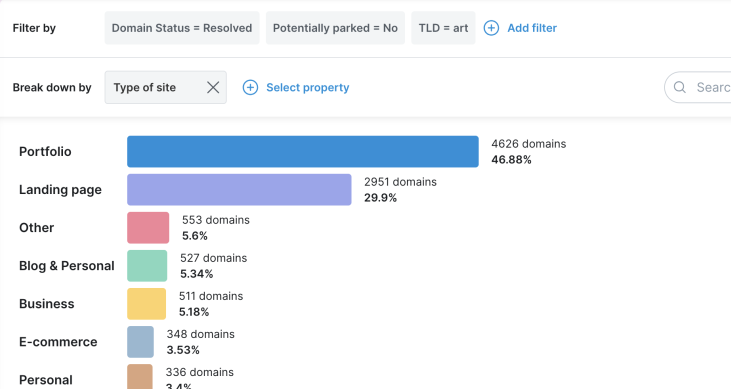
Most active .ART domains stay true to the extension’s original mission: nearly half (46.88%) of non-parked, resolved .ART domains are portfolio sites created by artists, designers, and creative professionals showcasing their work. Landing pages make up another significant slice (29.9%), often used for promotions or projects in development.
Beyond that creative core, .ART has a meaningful share of sites that fall into business and e-commerce categories, with growing segments such as personal blogs, digital galleries, and online shops selling creative products.
Naming patterns reinforce this picture. The most common prefixes and suffixes like studio, gallery, design and photo are closely tied to artistic work, while newer trends like AI, NFT, and shop highlight how the namespace is evolving.
What this means: .ART remains artist-centric, but its growth into commercial and emerging niches suggests clear opportunities for segmentation.
Web hosts can tailor packages toward artists needing simple portfolio sites, startups experimenting with AI or NFTs, and creative businesses seeking professional-grade e-commerce or hosting solutions.
Performance & Visibility: Underused Potential
Despite healthy adoption, most .ART websites struggle to gain visibility in search. In our analysis, more than a third of active domains receive fewer than 50 organic visits per month.
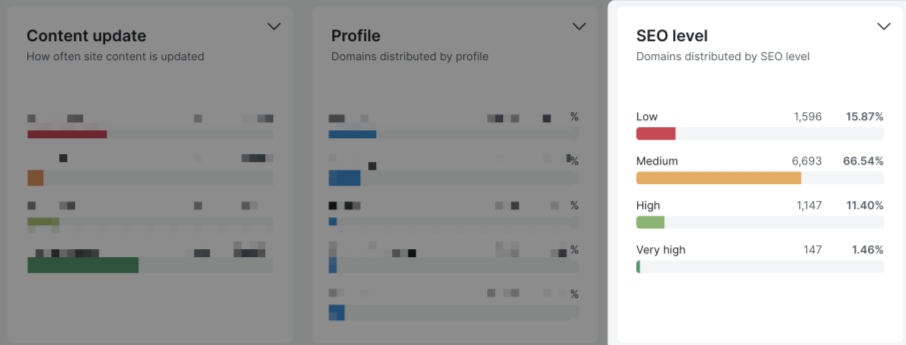
SEO scores cluster around the “medium” range, with only a small fraction achieving “high” or “very high” levels. This suggests limited investment in optimization and the inherent challenge of building authority within a relatively young TLD.
On a positive note, .ART users are keeping up with security standards: nearly 9 in 10 active domains have SSL certificates installed, with free and automated options like Let’s Encrypt dominating.
Security adoption is largely a success story for .ART— only about 4% of active sites were unsecured.
Regarding performance, roughly 2% of .ART sites took more than 3 seconds to load, and nearly 40% of these slow performers were on WordPress. That concentration highlights an opportunity for managed WordPress hosting and performance-focused services tailored to .ART users.
What this means: .ART site owners may lack the expertise or resources to compete in SEO or optimize site performance.
For web hosts, this is a clear upsell opportunity. Bundled SEO tools, managed WordPress hosting, and performance-focused packages could directly address these gaps and help .ART websites that are still building their online presence unlock their visibility potential.
Evolving Use Cases
With the premium pricing adjustment, a surge in new registrations expanded the .ART ecosystem. While many of these new registrations align with the creative industries, we found that some have been acquired for entirely different purposes.
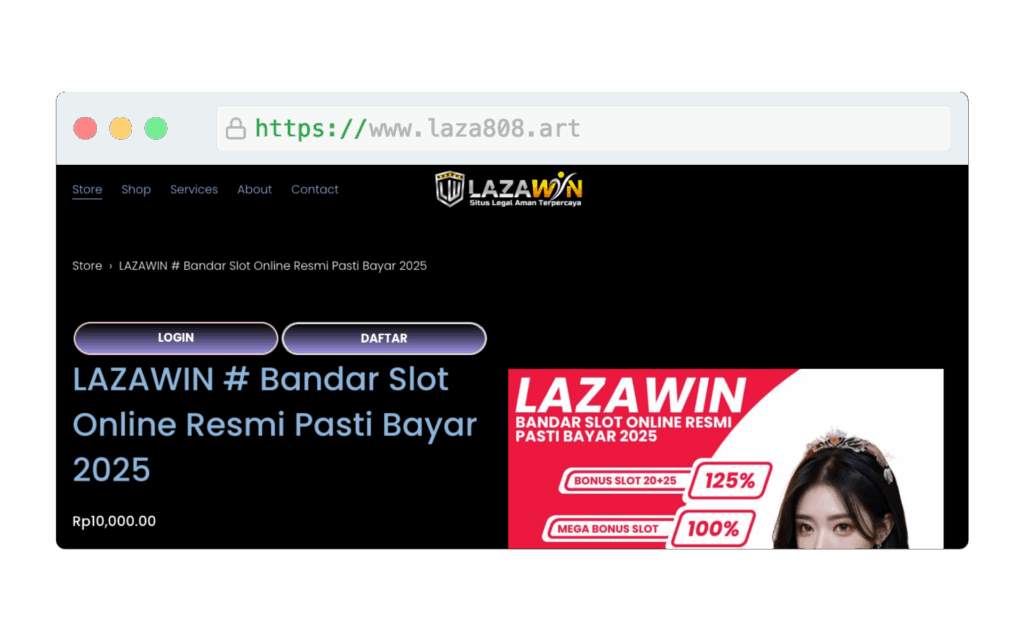
In our sample, we found previously expired domains repurposed for unrelated content, including about 550 active sites tied to gambling.
This is a small fraction of the namespace, but it highlights an unintended use case for a high-end TLD like .ART.
What this means: adoption is growing, but registrars and the registry will need to monitor evolving use cases to protect the domain’s brand integrity and keep it aligned with its creative mission.
Key Takeaways
- .ART is performing well: registrations are growing, and the extension has carved out a recognizable niche. Portfolios still dominate, keeping the extension closely tied to the creative community. .ART shows how a niche TLD can thrive by anchoring itself in a strong identity and mission.
- Most sites are under-optimized: SEO issues are common, leaving room for hosts and registrars to add value with add-on tools and managed services.
- New segments are emerging: beyond artists and galleries, adoption now includes AI, NFTs, and e-commerce projects.
- Growth needs oversight: a small share of domains are being repurposed in ways that don’t fit the TLD’s mission, making monitoring and policy important to preserve .ART’s brand integrity and long-term positioning.
As .ART expands, there is a clear opportunity in helping its community build stronger online presences. Hosts that address the specific needs of these users can play an outsized role in shaping the TLD’s next chapter.

Wences Garcia
Author of this post.