
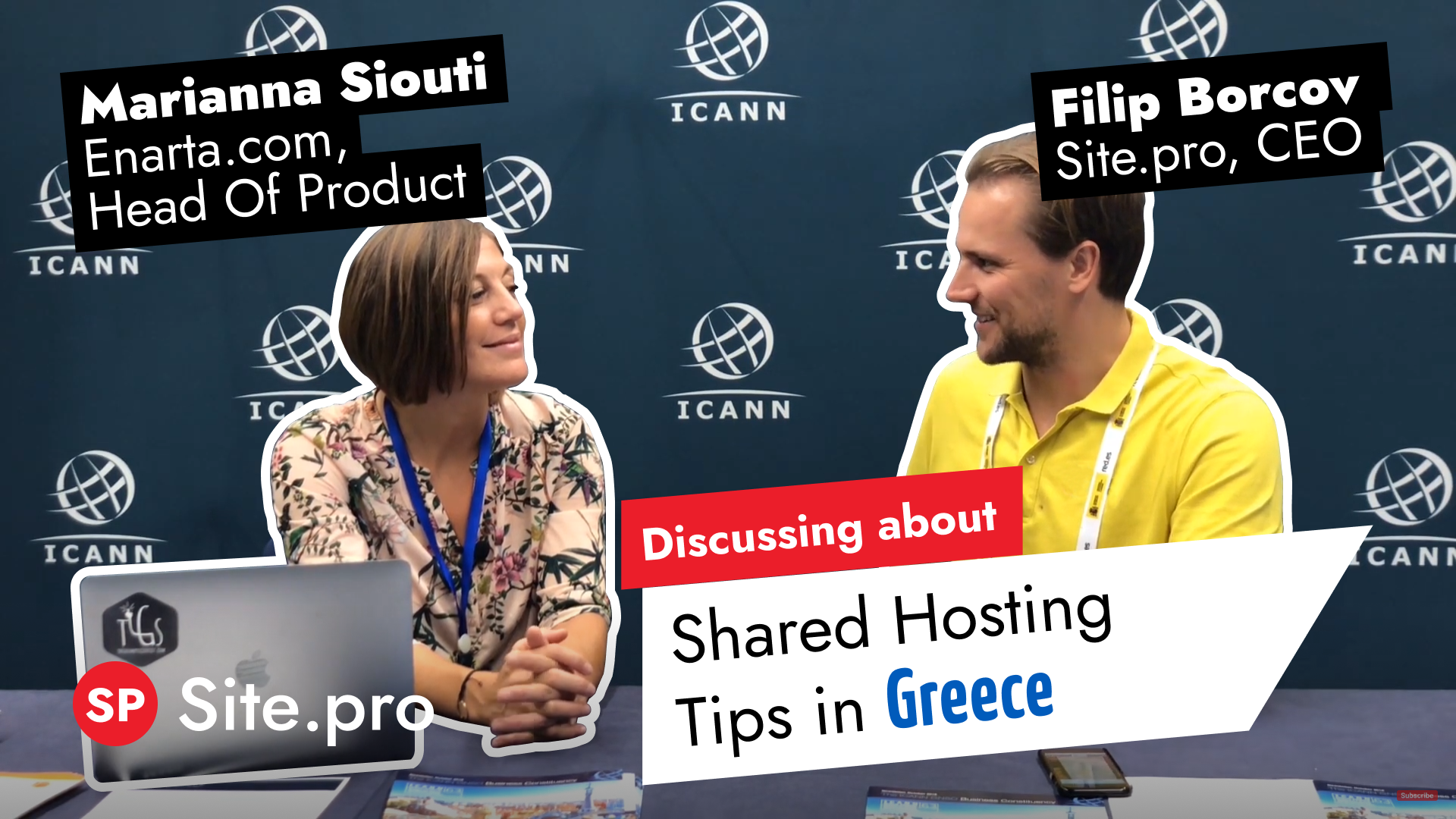
Looking into the shared hosting markets of European countries is always interesting, as you can get a glimpse of how already mature and well-developed markets work and conduct their business. This was true also in the case of Greece, the representative of which we met for a chat. Marianna Siouti, the head of product at Enartia shared with us what their companies do, their experience in the Greek market, and how the country’s shared hosting market works.
The Enartia Family
Enartia is an umbrella brand for a group of companies operating in the shared hosting and domain markets. The products of Enartia are:
Papaki.com — First and the leading domain registrar in Greece;
Top.host — Hosting service for professionals;
Thecore.io — A tool for eCommerce.
The Top.host is oriented to Greece and outside, as an attempt to expand the company internationally.
Localization and Customer Support in Greece
Papaki initially started offering services in both English and Greek, while Top.host was translated to Greek only a couple of years ago since they started expanding. In the words of Marianna, in Greece, if you are working with local clients, having a website only in Greek is enough. The same goes for customer support as well, as people address their questions in the local language. Recommended support schedule for hosting companies in the country is 24/7, as people often work outside of office hours as well.
Making Sense of Greek Shared Hosting Market Size
Greece is a country of around 10 million people and has a 70% internet penetration rate. In total, there are 450,000 .gr domains registered, with 280,000 of them registered with Papaki. Marianna mentions that when they monitor the market in Greece and abroad, they are mentioning a small yet steady growth in both the market and the usage of the local domain. “After the crisis a few years ago, people have started turning online, to grow their businesses with eCommerce.” Currently, on average, every shared hosting client has 4.7 domain names.
Laws, Regulations, and Restrictions
Like many other European countries, there are not many laws and regulations controlling the shared hosting market in Greece. One rule is, however, that you need to offer a .gr domain, the company needs to be based in Greece or have a Greek presence. The servers don’t have to be in the country and can be anywhere.
Pricing and Payments
In Greece, the average price for shared hosting services is a bit higher than in other EU countries, but not too drastically high. Marianna mentions that a lot of companies enter into “price wars” offering services at 1 Euro to gain customers, but they’ve been avoiding doing that. What comes to payments, bank transfers are very popular in Greece. People prefer sending money via bank. Credit card payments come second.
Website Builders in Greece
The usage of website builders in Greece is just starting to grow. “There are many popular website builders out there, and people use them. We see the growth of usage. When people buy hosting, they often ask for information about website builders, and expect us to offer something.”
Preference for Local Services
In the words of Marianna, people in Greece prefer local hosting providers, but not for patriotic reasons. “People want faster hosting. Having servers in Greece helps to provide faster services.” The Internet connection in the country is very fast, even on smaller islands. The infrastructure is developing, and people demand better and better services. Papaki collaborated with local data centers to ensure fast performance.
Growing in Greece as a Company: Know-How and Tips
To grow a successful business in Greece, Marianna has shared some of the principles Enartia has been following.
- The company has values and culture and hires according to that;
- They focus on marketing and promotions;
- The company tries to always innovate, as it’s key to growth;
- They stay aware of trends and changes.
While following these principles, however, it’s important to keep balance. “Customers want reliable and very fast hosting. Too much innovation too soon and in a short period of time won’t do much.” However, the culture and the people are the most important thing, Marianna mentions, as they are the ones driving the company forward.
Wrapping Up
With growing usage of the Internet, people starting to understand the power of eCommerce and digital, and light regulations in place, Greece makes for an excellent market to enter as a shared hosting company. We loved learning about the inner workings of the market from the leading provider in the country, and hope you found the interview and this recap just as insightful.
