
TL;DR – Wix Harmony, announced in January 2026, is Wix’s latest attempt to shorten the path from idea to live website by combining AI-driven generation with manual editing. In practice, it might deliver faster first results than more “traditional” setups, like hosting + WordPress, but our testing and early user feedback shows that speed drops sharply once iteration and branding work begin.
Harmony seems to work best for simple projects that value “something live” over fine control. It struggles with refinement: small changes take time, branding quickly hits a ceiling, and restarting is often easier than fixing an off-target first draft. Our own test results matched recurring user complaints about generic output and slow micro-adjustments.
What Wix actually announced
In January 2026, Wix officially introduced Wix Harmony, positioning it as a new hybrid website creation environment that combines AI-driven generation with manual drag-and-drop editing. It’s an expected next step after other AI tools additions, covered by webhosting.today in 2025 – “Wix adds AI coding with MCP Server” and 2024 – “Wix introduces AI website builder in multiple languages”.
Harmony builds on earlier Wix efforts such as ADI, but replaces the questionnaire-based flow with a conversational AI agent (“Aria”) that generates a complete site draft (structure, copy, images, and basic branding) before handing control back to the user inside the editor.
Wix’s messaging on this launch suggests: faster onboarding, less friction, and fewer decisions required before a site goes live.
What it looks like in practice
We tested Harmony shortly after launch and compared those results with early user feedback on Reddit.
Time to first result
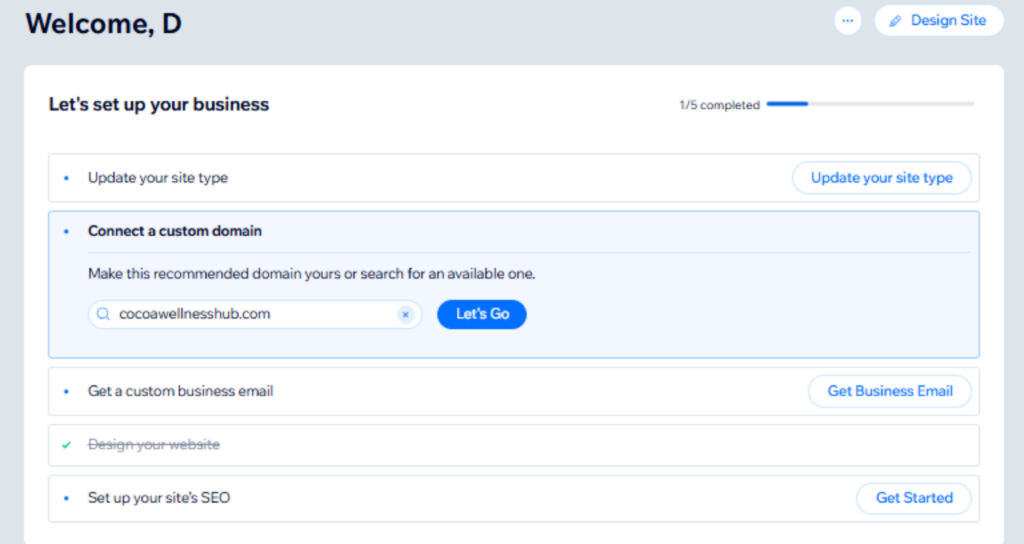
In our testing, the first usable version of a site appeared after 4–7 minutes. That is significantly faster than a WordPress + hosting setup, but slower than the “instant” impression suggested by some promotional material. External users report similar ranges, usually describing the output as a draft, not a finished site.
Branding and logos
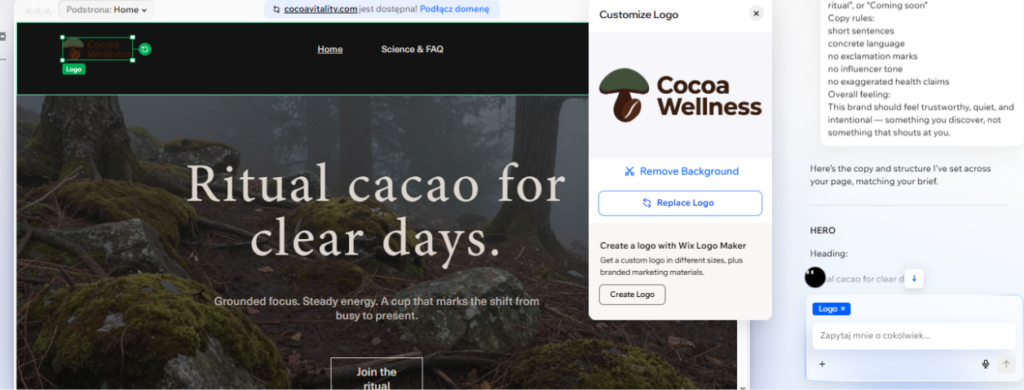
Harmony can generate logos and apply a consistent color palette, and in some cases the first result is better than expected. Refining it is harder, as changes do not always go cleanly. Multiple early users describe AI-generated branding as “generic”, which is consistent with broader feedback around AI logo tools, not unique to Wix.
Iteration speed
Initial generation is quick. Iteration is not. Small changes, like logo tweaks, layout corrections, copy adjustments take noticeably longer. After a few failed prompts, switching to manual editing is faster than continuing the AI conversation.
How users are reacting so far
Early sentiment is broadly positive among non-technical users. The most common praise is the removal of the “blank page” problem: users like starting with something rather than choosing templates or configuring basics.
At the same time, recurring complaints are already visible:
- slow micro-iterations,
- limited control once a design direction is set,
- and a recognisable “Wix look” after the initial draft.
Professional designers and agencies tend to describe Harmony as useful for drafts or quick projects, but not as a replacement for more flexible setups.
Why Wix Harmony matters for hosting providers
Wix Harmony was framed as a natural evolution of Wix’s AI tooling. From a hosting perspective the launch matters not because it changes the market overnight, but because it directly targets the weakest part of the hosting funnel: first-time users and early-stage SMBs.
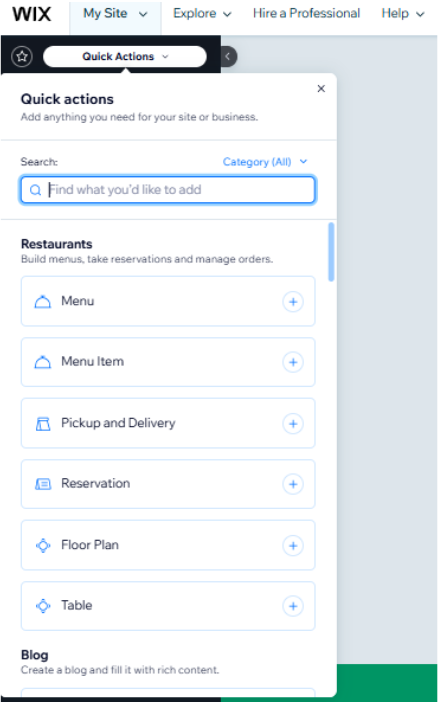
Hosting providers have heard similar narratives before with Wix ADI, Squarespace and, more recently, AI-assisted builders from Hostinger and Shopify. Harmony is different mainly in execution. It removes more friction earlier, bundles more functionality by default, and leaves fewer moments where a user needs to understand what hosting actually is.
The WordPress angle
This is also why many hosting providers have begun adopting tools like Extendify.
Extendify tackles the same problem Harmony exploits, which is early-stage friction, but from within the WordPress ecosystem. It uses AI to accelerate onboarding and site creation while keeping the site portable and fully owned by the customer. Crucially, hosting remains a choice rather than a lock-in.
For hosts, this is not about copying Wix feature-for-feature. It is about preventing first-time users from dropping out before they ever experience value. In that sense, Extendify represents an industry response, not a competing builder.
Bottom line
Wix Harmony does not kill hosting. It does, however, seriously challenge hosting models that rely on manual onboarding and undifferentiated shared plans.
By solving most early-stage problems (setup, structure, basic branding and publishing) Harmony removes the very moments where hosting traditionally entered the conversation. That makes it a meaningful and growing threat to the lower end of the market, even if its impact on professional hosting remains limited for now.
The competitive pressure is moving upstream, into onboarding, guidance and lifecycle support.

Damian Andruszkiewicz
Author of this post.