
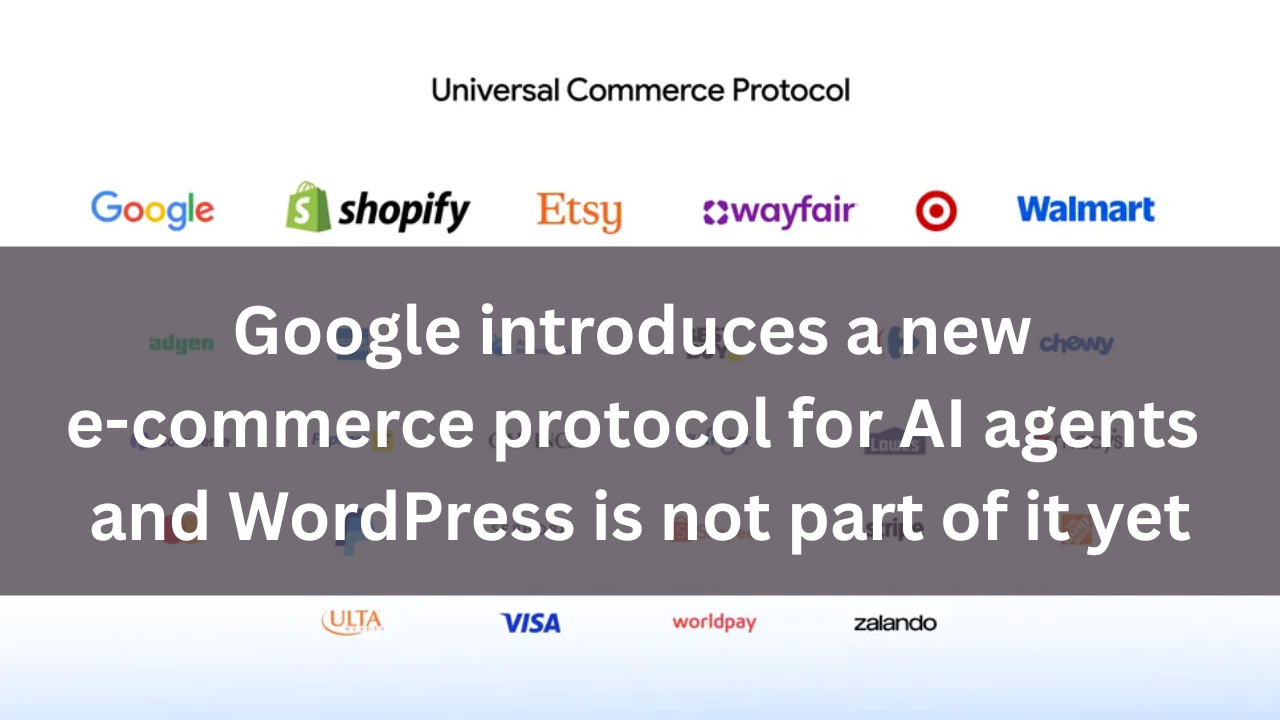
TL;DR – Google published a new commerce protocol designed for AI agents, not humans. Major SaaS platforms are already aligned. WordPress and WooCommerce are not part of the process yet. The issue isn’t technology, only how fast different models (SaaS vs standalone) absorb change.
What happened
Google published the Universal Commerce Protocol (UCP). It’s an open standard that allows AI agents to discover products, check inventory, apply pricing logic, and complete transactions without relying on a traditional storefront flow.
The launch partners are platforms that already control their commerce stack end to end: Shopify, BigCommerce, Stripe, Visa, Walmart, Target.
WordPress and WooCommerce are not on that list.
What this might change
AI agents are not the dominant source of ecommerce traffic yet. But they are becoming a strategically important buyer interface, and large platforms are already preparing for that shift.
If an AI assistant can complete a purchase without loading a theme, rendering a checkout page, or executing a plugin-heavy frontend, some long-standing assumptions break down. Page speed becomes less visible. UX design matters less at the point of purchase.
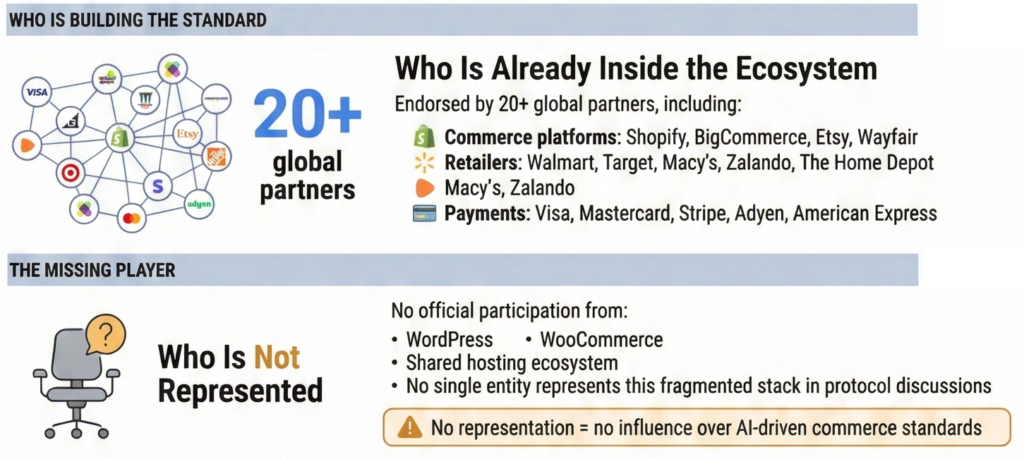
The WordPress representation gap
WooCommerce is an ecommerce platform, but it operates very differently from SaaS solutions. The key difference is not technology, but standardization. This difference shows up most clearly in how quickly new standards can be rolled out. In standalone ecosystems, adoption is fragmented and slower by design.
Automattic does not control WooCommerce merchants the way Shopify controls its base. Hosting providers don’t. Plugin developers don’t. Agencies don’t.
When standards for machine-to-merchant commerce are defined, the WordPress side has no single negotiating voice. It’s a coordination problem and it directly affects reaction speed.
SaaS versus standalone
For SaaS ecommerce platforms like Shopify, adopting a new protocol is a platform decision. Once implemented, it rolls out centrally. Merchants don’t run projects, they don’t audit compatibility – those problems are on the SaaS side.
For standalone platforms like WooCommerce, a protocol follows a different path. It starts as a feature request, then it becomes a roadmap item. Eventually, it turns into a user-side implementation project.
That difference determines how fast ecosystems adapt.
The WooCommerce response
The WooCommerce community has already reacted. A public feature request for native UCP support is live, with early discussion following:
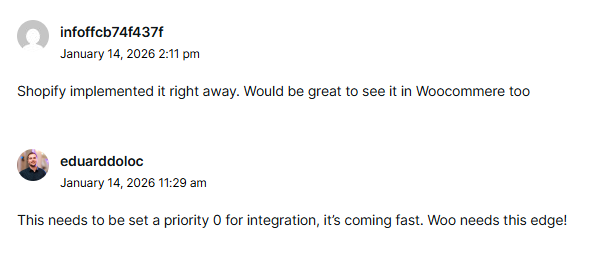
That’s a healthy open-ecosystem response. But it also shows the problem. In a standalone model, protocol support begins as conversation, not deployment.
Even if WooCommerce adds native UCP support, real adoption will still depend on individual merchants validating plugins, themes, custom checkout logic, and payment gateways. That is additional time, risk, and cost all on the user side.
In SaaS platforms, the same change is largely invisible to the merchant.
Why this is uncomfortable for shared hosting
WooCommerce stores are not vertically integrated products. They are assembled from many independently evolving components, which makes coordinated upgrades slower and riskier.
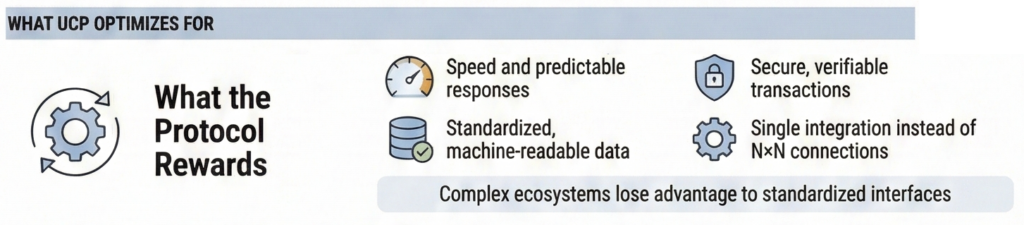
UCP doesn’t remove operational responsibility, but it significantly reduces integration complexity by standardizing how commerce systems talk to each other.
That efficiency is designed for coherent stacks, not so much for fragmented ones.
If AI agents start preferring UCP-native platforms, WooCommerce traffic might change – with fewer human visits there will be less value in frontend optimization and less tolerance for slow or unstable environments.
What this means for hosting operators
If WooCommerce remains slower to adopt protocols like UCP, hosting providers face predictable pressure.
Traffic quality shifts toward automation, which tends to lower ARPU. Reliability and latency matter more than disk space. Hosting risks becoming a commodity layer beneath a commerce stack the host does not control.
At the same time, the shift creates a narrow opportunity. If merchants stay with WooCommerce for independence, hosting may need to evolve away from page delivery and toward backend execution, transaction logic, API reliability, and agent-facing endpoints.
You could call this “WooCommerce UCP hosting” but it’s not a free evolution. It adds another integration layer on top of already customized stores.
Bottom line
Customization is no longer a free advantage. In standalone ecommerce, it increasingly turns into friction when new standards emerge. More customization now often means slower adaptation, higher upgrade risk, and higher long-term maintenance cost.
The real divide is not open versus closed platforms. It’s whether protocol shifts like UCP are absorbed centrally or pushed to merchants and hosts. That difference will most likely shape margins over the next few years.

Damian Andruszkiewicz
Author of this post.