
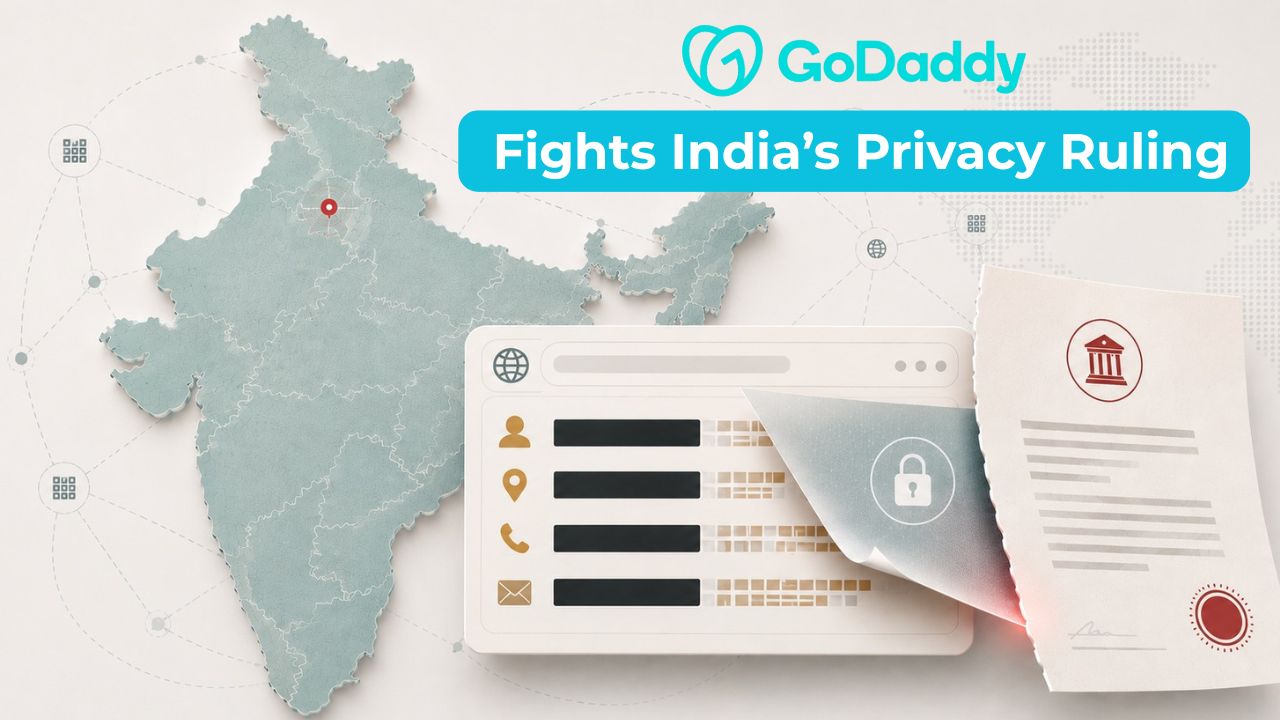
GoDaddy has told an Indian court that a ruling on domain-name privacy could force it and other registrars out of the country. In an appeal to the Delhi High Court, first reported by Reuters from non-public filings, the world’s largest domain registrar called a December 2025 order “commercially destabilizing” and warned that complying with it may push domain companies to “exit India.” At the heart of the fight is a simple question with global consequences: must a registrar unmask the person behind a domain name on request, and stop offering privacy protection by default?
What the Delhi High Court Ordered
The order came in Dabur India Ltd. v. Ashok Kumar, decided on December 24, 2025, in which the court reframed large-scale misuse of well-known brands in domain names as a form of systemic cyber fraud rather than ordinary trademark infringement. The case grew out of complaints from more than 20 Indian and multinational companies, among them Amazon, Microsoft, McDonald’s, Xiaomi and Colgate-Palmolive, over a wave of counterfeit and phishing sites impersonating their brands. Alongside blocking more than 1,100 fraudulent websites, the court issued 14 directions aimed at every registrar operating in India. Three of them cut to the core of how the domain business works:
- Disclose a domain owner’s name, address, phone number and email within 72 hours to any party claiming a “legitimate interest”
- Stop offering WHOIS privacy protection as a free default
- Refuse to register domain names that closely resemble protected trademarks
Why GoDaddy Is Fighting It
GoDaddy has challenged the directions before a larger bench of the Delhi High Court, in an appeal that Reuters reported ran to 5,121 pages. Its central objection is practical: the company says there is no reliable way to judge who genuinely holds a “legitimate interest” in a registrant’s identity, and that handing over names, addresses and phone numbers on that basis would expose lawful website owners to “foreseeable privacy and security risks,” including stalking and harassment. Ending default privacy and forcing disclosure, it argued, is destabilizing enough that registrars may have to leave the market rather than comply. GoDaddy is not alone. Namecheap and Hosting Concepts, which operates Registrar.eu, have filed their own challenges to the same order.
The Real Fight Is Over WHOIS Privacy
Underneath the India case sits a longer argument about who gets to see domain registration data. For years, WHOIS records listed a registrant’s contact details in the open, until privacy services and, after Europe’s GDPR, mass redaction turned most of that data private by default. ICANN’s own rules let registrars disclose records in defined circumstances, but that regime is discretionary and case by case, without the mandatory 72-hour unmasking the Delhi court ordered. That gap is why GoDaddy frames the stakes as global: a national court has ordered a disclosure standard looser than the one the industry spent a decade tightening, and if it stands in a market the size of India, brand owners elsewhere will cite it. The tension is genuine on both sides. The companies that brought the case are fighting impersonation that harms their customers, while the registrars say the cure exposes millions of ordinary registrants.
What to Watch
The larger bench of the Delhi High Court is scheduled to hear the GoDaddy, Namecheap and Hosting Concepts appeals on July 16, 2026. The narrow question is whether the court softens the “legitimate interest” disclosure rule and the ban on privacy-by-default, or lets them stand. The wider one is precedent. India is too large a market for registrars to walk away from lightly, which is why the “exit” language reads as leverage as much as a plan. But the ruling will test how far a single national court can rewrite domain-privacy norms that were set globally, and whether brand protection or registrant privacy becomes the default for the next decade.

Sources
- GoDaddy May Exit India Over Cybersquatting Legal Battle - DomainIncite
- GoDaddy Sounds Alarm Over How India Law Would Upend Internet Privacy Everywhere - Gizmodo
- GoDaddy Fears India's Crackdown on Fake Websites Could Damage Internet - Business Standard
- Why GoDaddy Is Challenging Delhi HC's Order Ending Default Privacy for Domain Owners - MediaNama
- From Cybersquatting to Cyber Fraud: Delhi High Court Rewrites the Rules in Dabur Case - S.S. Rana & Co.