
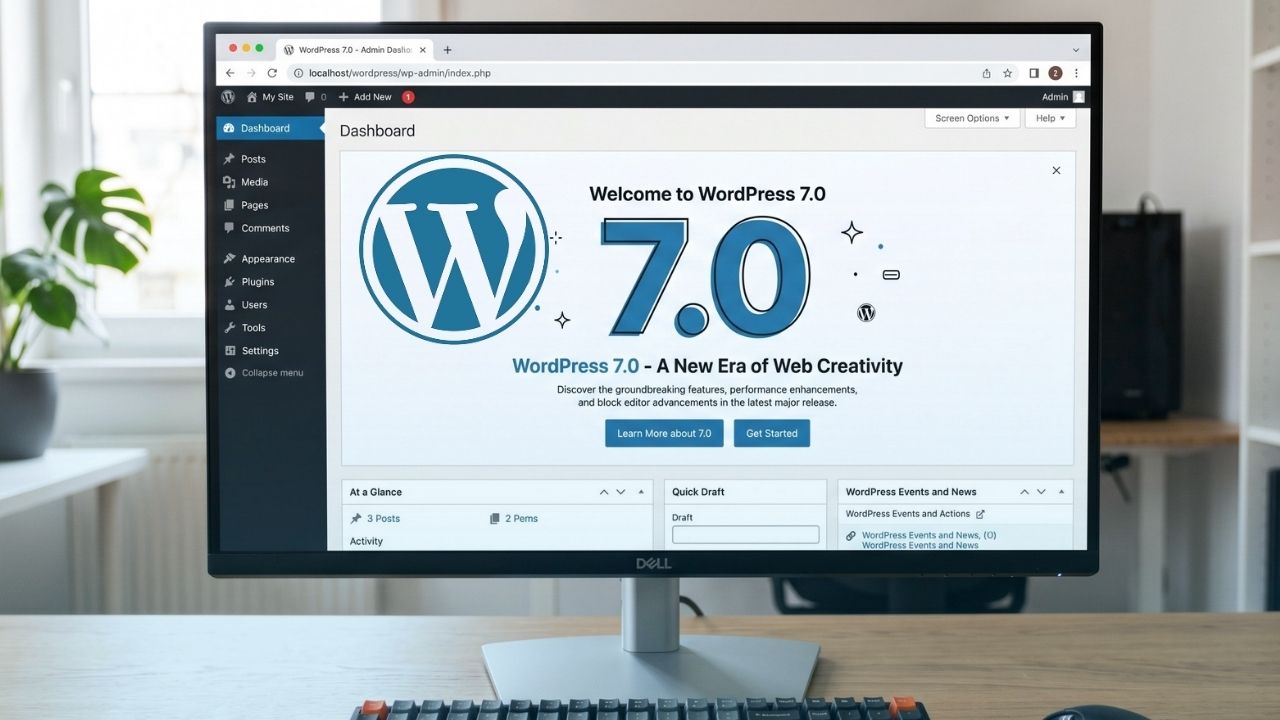
WordPress 7.0 “Armstrong”, named after jazz musician Louis Armstrong, ships today, May 20, 2026, following a delay from the original April 9 target. For hosting providers, three things matter above all else: PHP 7.4 is now the minimum supported version, a built-in AI layer has arrived in core, and real-time collaborative editing, the most-anticipated feature on the roadmap, was pulled from the release on May 8. Hosts that have not already validated customer plugin stacks, updated their default PHP offering, and communicated the PHP change to affected customers have a problem that started the moment 7.0 went live.
The PHP Floor Just Moved
WordPress 7.0 raises the minimum PHP version to PHP 7.4. Any customer site running an older PHP version and upgrading to WordPress 7.0 is now on an unsupported configuration.
For hosting providers, the business consequence is straightforward: customers who auto-update WordPress and are still on an older PHP version will be running software their host no longer supports as of today. The risk is not just technical. A hosting provider that allowed that situation to occur without communicating the change carries a support liability and a potential churn trigger if something breaks.
Hosts should have already:
- Updated their default PHP offering to a current version (PHP 8.x)
- Identified customers actively running outdated PHP with WordPress installations
- Communicated the PHP 7.4 minimum requirement before today’s release
If that communication has not gone out, it should go today alongside guidance on how to update PHP from the customer’s hosting control panel.
AI Integration Is Now Part of WordPress Core
WordPress 7.0 ships the WP AI Client: a built-in interface that allows plugins to connect to AI models through a single, consistent WordPress-native integration. Three official connector plugins are available at launch: AI Provider for Anthropic, AI Provider for Google, and AI Provider for OpenAI. Site administrators configure their chosen provider under Settings > Connectors.
The practical implications for hosting providers are two-fold. First, AI-powered WordPress plugins now have a standardised route to connect to external AI services, which means adoption of AI features across the plugin ecosystem is likely to accelerate. Second, those connections are outbound requests from hosted sites to external AI services. The cost of those API calls is borne by the site owner, not the host, but the network activity originates from the server. Providers running high-density shared hosting environments should monitor whether AI-enabled plugins drive a measurable increase in outbound traffic over the coming months.
The WP AI Client has no hosting-side configuration requirement. It is opt-in at the site level and only active when a site administrator installs a connector plugin and configures an API key.
Plugin Compatibility: Two Changes to Watch
Two changes in 7.0 carry meaningful plugin compatibility risk for hosting providers managing large WordPress customer bases.
DataViews is a modern replacement for the traditional WordPress admin screens where posts, pages, users, and other content are managed in bulk. Plugins that customise, extend, or add features to those admin screens may behave unexpectedly or stop working on 7.0. For managed WordPress hosts or agencies managing client sites, this is the change most likely to generate inbound support requests.
The second change concerns the block editor: when a post uses only modern blocks, the editor now loads in a more isolated environment by default. Plugins that add custom tools or styles to the editor using older methods may lose functionality in that environment. Hosts that have not tested customer plugin stacks against 7.0 should treat today as a potential spike day for editor-related tickets.
Real-Time Collaboration Did Not Ship
Real-time collaborative editing, which allows multiple users to edit the same post or page at the same time, was removed from the 7.0 release on May 8, 2026, twelve days before launch. The WordPress core team cited race conditions, excessive server load, memory efficiency problems, and recurring bugs surfacing during fuzz testing as reasons the feature could not be included in this release cycle. It will be re-evaluated for a future release.
For hosting providers, the removal is the lower-risk outcome. Real-time collaboration would have required servers to keep active connections open for every simultaneous editing session, with resource implications that had not been publicly modelled for shared hosting environments. Its absence from 7.0 means hosts do not need to plan for that infrastructure impact today.
For customers who were waiting for the feature: it is delayed, not cancelled. No timeline for a future release has been committed publicly.
What Hosts Should Do Today
- PHP: confirm your default PHP offering is 7.4 or higher (PHP 8.x preferred); identify and notify any customers still on older PHP with active WordPress installations
- Plugin compatibility: if you manage WordPress environments on behalf of customers, validate plugin stacks against 7.0 before enabling auto-updates
- Support readiness: DataViews admin screen changes and block editor updates are the most likely sources of plugin breakage; brief your support team on both before the first tickets arrive
- AI Client: no action required on the hosting side; the feature is opt-in and has no server-level configuration dependency

Sources
- WordPress 7.0 Field Guide - Make WordPress Core (official)
- Introducing the AI Client in WordPress 7.0 - Make WordPress Core (official)
- WordPress 7.0 Release Day Process - Make WordPress Core (official)
- WordPress 7.0 Release Candidate 4 - WordPress News (official)
- What's New for Developers: May 2026 - WordPress Developer Blog (official)
- WordPress 7.0 "Armstrong" - WordPress News (official)