
The global web hosting industry is no longer defined by scarcity or technological limitations. Instead, it is marked by abundance, with an overwhelming number of providers offering nearly identical services at increasingly competitive prices.
Shared hosting plans, virtual private servers, and cloud-based solutions have become commoditized, making it difficult for companies to stand out based on infrastructure alone. As a result, hosting providers are being forced to rethink how they create and communicate value.
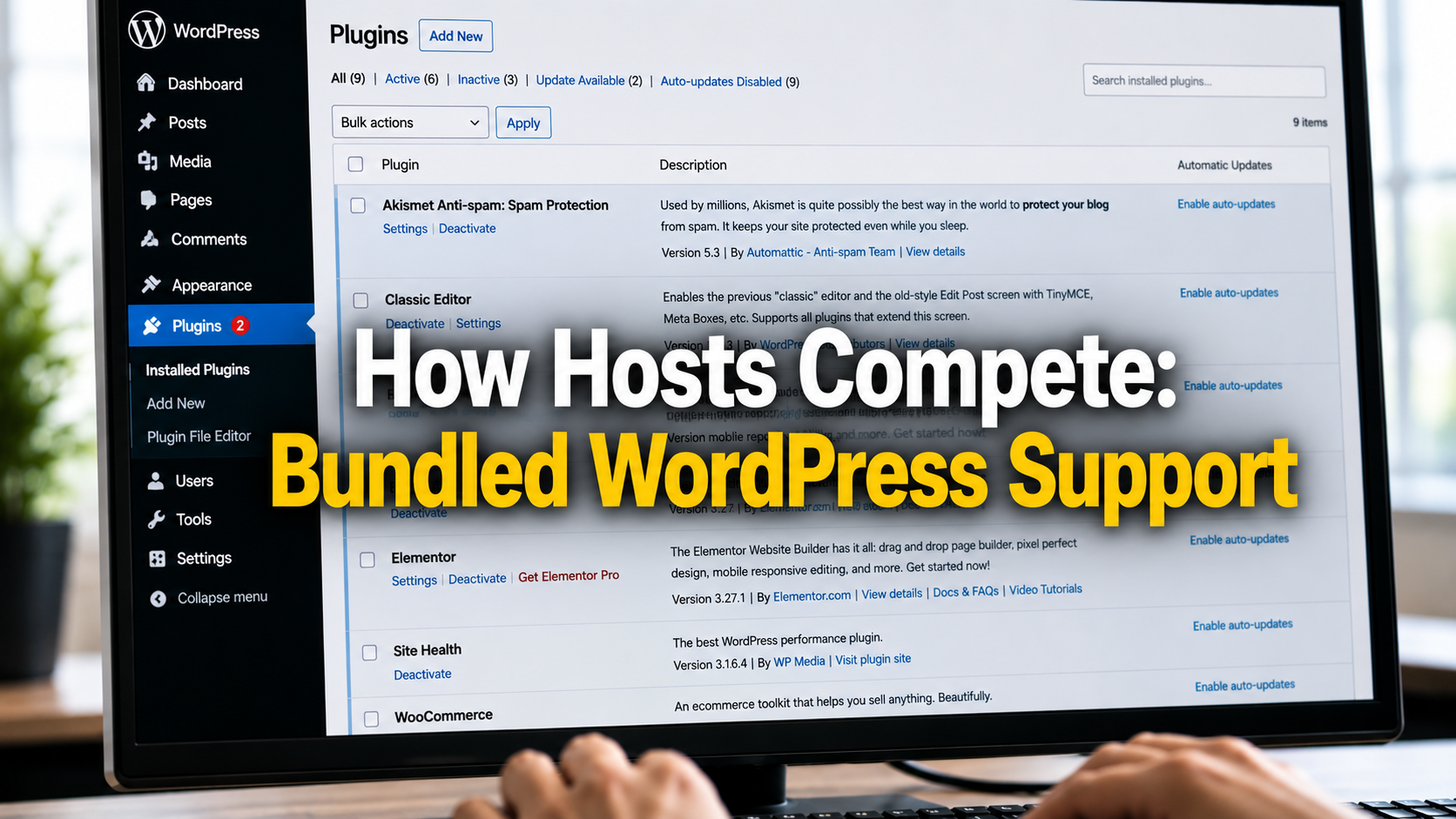
One of the most notable shifts in recent years is the move toward bundling WordPress support services directly into hosting plans. This evolution reflects a broader shift from product-based competition to service-led differentiation, where expertise and customer experience play central roles.
The Growing Challenge of Market Saturation and the Importance of Bundled Services for WordPress
The hosting market has expanded rapidly due to advancements in cloud computing and the widespread availability of scalable infrastructure. Platforms such as AWS and other cloud providers have lowered entry barriers, enabling even smaller companies to offer reliable hosting services without owning physical data centers.
While this democratization has fueled innovation, it has also intensified competition. Customers today are presented with dozens, if not hundreds, of hosting options, many of which promise similar uptime guarantees, storage capacities, and pricing structures. In such an environment, traditional differentiators have lost their impact.
Consequently, price wars have become common, often eroding profit margins. For many providers, competing on cost alone is neither sustainable nor strategically sound. The need for a new value layer has become increasingly apparent.
WordPress as a Strategic Anchor
At the center of this shift lies WordPress, the content management system powering a substantial portion of websites worldwide. Its flexibility, open-source ecosystem, and extensive plugin library make it the platform of choice for businesses, bloggers, and developers alike.
However, WordPress also introduces operational complexity, particularly for non-technical users like:
- Managing updates
- Resolving plugin conflicts
- Optimizing performance
- Ensuring security
These issues often extend beyond the traditional scope of hosting support, leaving users to seek external help. Recognizing this gap, hosting providers are beginning to position WordPress not just as a supported platform but as a core component of their service strategy.
The Emergence of Bundled WordPress Support Services
Bundled WP support services represent a significant evolution in how hosting companies approach customer needs. Rather than limiting assistance to server uptime or basic troubleshooting, providers are expanding their offerings to include hands-on website management.
These bundled services typically encompass:
- Plugin and theme support
- Performance optimization
- Hacked site repair
- Automated backups
- Security monitoring
In some cases, providers also offer proactive interventions to identify and resolve issues before they affect website performance.
This approach aligns with the expectations of modern users, who increasingly prefer integrated solutions over fragmented service ecosystems. Instead of juggling multiple vendors, developers, security experts, and hosting providers, customers can rely on a single partner for end-to-end website maintenance and management.
Enhancing Customer Retention and Lifetime Value
Customer retention remains a critical challenge in the hosting industry, where switching costs are relatively low. Users frequently migrate to competitors in search of better pricing, improved performance, or more responsive support.
Bundled WordPress services help address this issue by increasing customer dependency on the provider. When a hosting company manages not just the infrastructure but also the functionality and health of a website, the relationship becomes more deeply integrated.
This integration makes switching providers more complex, thereby reducing churn. At the same time, it increases customer lifetime value and revenue, as users are more likely to invest in premium plans that include comprehensive support.
Proactive service delivery further strengthens retention. For instance, identifying and mitigating security risks before they escalate can prevent costly downtime, reinforcing the provider’s role as a trusted partner.
Operational Realities & Cost Implications and How Specialized Partners and Automation Can Help
Despite its advantages, bundling WordPress support services introduces operational challenges.
- Delivering high-quality support requires specialized knowledge, which in turn demands investment in skilled personnel.
- Support teams must be well-versed in WordPress core functionality, popular plugins, and common troubleshooting scenarios. This level of expertise goes beyond traditional hosting support, which typically focuses on server-related issues.
- Automation also plays a key role, handling routine tasks such as updates and backups to reduce the workload on human agents.
To manage these demands, many providers are adopting tiered service models. Entry-level plans may include limited support, while premium tiers offer more comprehensive assistance. Striking the right balance between scalability and service quality remains a central concern for hosting companies pursuing this strategy.
The Role of Specialized Service Partners
As hosting providers expand their service offerings, many are turning to external partners to deliver specialized WordPress support. Companies like Seahawk Media have emerged as key players in this ecosystem, offering white-label solutions that hosts can integrate into their platforms.
By collaborating with such providers, hosting companies can offer expert-level services without building large in-house teams. These partnerships often cover a wide range of functions, including website development, maintenance, optimization, and security management.
This model accelerates time-to-market for bundled service offerings and allows hosts to focus on their core infrastructure capabilities. At the same time, it enables them to deliver consistent, high-quality customer support.
Automation and the Future of Support Delivery
Automation is also becoming an integral component of bundled WordPress services. Tools that monitor performance, detect vulnerabilities, and automate updates can significantly enhance efficiency.
Artificial intelligence is playing an increasing role, particularly in customer support workflows. AI-driven systems can handle routine queries, analyze error logs, and even suggest solutions in real time. This reduces response times and allows human agents to focus on more complex issues.
Nevertheless, automation is not a complete substitute for human expertise. Complex WordPress environments often require nuanced problem-solving that only experienced professionals can provide. The most effective strategies combine automation with skilled support teams, creating a hybrid model that maximizes both efficiency and quality.
Final Thoughts: A Shift Toward Service-Led Hosting Models
The rise of bundled WordPress support services signals a broader transformation in the hosting industry. Providers are moving away from purely infrastructure-based offerings toward service-led models that prioritize customer outcomes.
This shift is likely to redefine competitive dynamics. While low-cost providers may continue to attract price-sensitive users, those offering integrated, high-value services are better positioned to capture and retain long-term customers.
In an increasingly crowded market, the ability to deliver expertise, reliability, and convenience will determine success. Hosting, once seen as a commodity, is evolving into a service-driven industry where support is as critical as the servers themselves.
