
Elementor built its name as a plugin that ran on any host the user chose. When the company launched its own hosting product, that changed the dynamic in a way the hosting industry noticed. The natural question was whether the visual builder used on tens of millions of WordPress sites would follow the WP Engine path: offer a managed host, then gradually concentrate the best features there. Łukasz Nowak spoke with Gabriella Laster, Product Marketing Director at Elementor, at WordCamp Europe – about Angie and the WordPress Abilities API, the hosting strategy, and what she really thinks about AI-only web building.
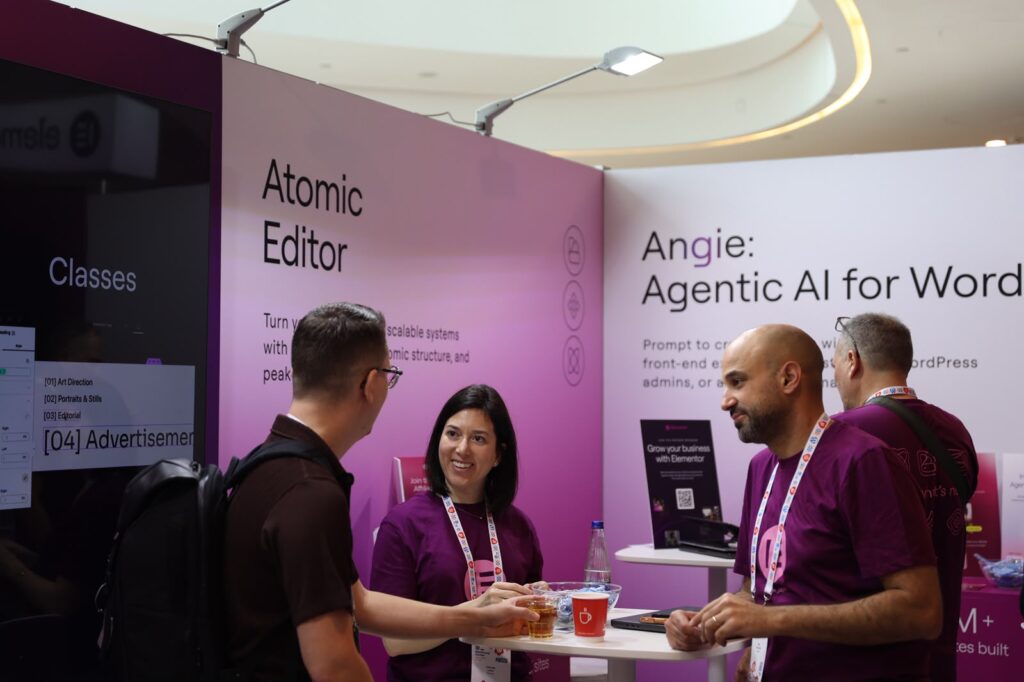
Łukasz: WordPress 7.0 introduced the Abilities API. What does that change for Elementor?
Gabriella: We have been building Angie, our AI agent, for a while. Angie can already do things like generate code. The next step is integrating with the Abilities API. Once we do that, any plugin that exposes a tool through the API can also be used by Angie. She will be able to draw on all of those tools on behalf of users.
Łukasz: Elementor launched its own hosting product. What is the thinking behind it?
Gabriella: Elementor started as an open source plugin and it still is. One thing we did really well is make WordPress accessible to people who may have found it a little bit more technically difficult – that is where Elementor comes from. The hosting option is there for people who want something more plug and play – one subscription, everything in one place. But those are your options. You can go with Elementor Hosting, or you can go with another provider. Elementor is not exclusive to our platform. You can get it either way.
Łukasz: Is there a risk of following the WP Engine route – moving the best features to the hosted version only, so users feel pushed toward the platform?
Gabriella: That is not the direction we want to go. What we are trying to do is give everyone using our cloud or our other tools the best products and experience we can create. If it means consolidating things to an extent, we still have other options.
Łukasz: Can AI replace a page builder like Elementor? People can already describe a website to an AI and get something back.
Gabriella: Elementor will have to evolve through the age of AI, and it already is. But there is a real limitation with purely AI-based web building. You need to know what you want to build and give the proper instructions. And when you want to make a change, you are prompting for it – which means you do not actually know what result you are going to get. It is a bit of a black box. The direction we are going is combining AI capabilities with an understanding of how web creators work – giving them the control to modify and edit to the pixel level, whatever they want to adjust.
Łukasz: What about platforms where you do not need WordPress at all? You buy hosting, describe your company, and the site is generated.
Gabriella: Anyone can build a website today – just go to an AI tool and describe what you want. But in the end, a lot of these websites end up looking the same. AI gives you the most likely result for what you described, which means they all converge on the same output. I think this is flooding the web with content, making it much harder for people to get their work seen by the right audience. So it becomes far more important to create highly engaging brand experiences – things that make people connect with your brand and want to stay on your website. And that is something WordPress, Elementor, and Angie have in common.
Photography: Nilo Vélez, Mikołaj Opach #Shotystyczny
