
The share of small business owners who can actually finish a website on their own was 20% before AI. With AI, it is still 20%. The number has not moved. At WordCamp Europe 2026, Łukasz Nowak spoke with Vito Peleg, CEO of Atarim, a collaboration platform used by more than 50,000 agencies worldwide. Vito breaks down why agency panic is running ahead of the data, why the standard 72-hour agency SLA is already dead, how 100 people could soon manage 100,000 clients, and what the shift from seats to credits means for every agency pricing model.
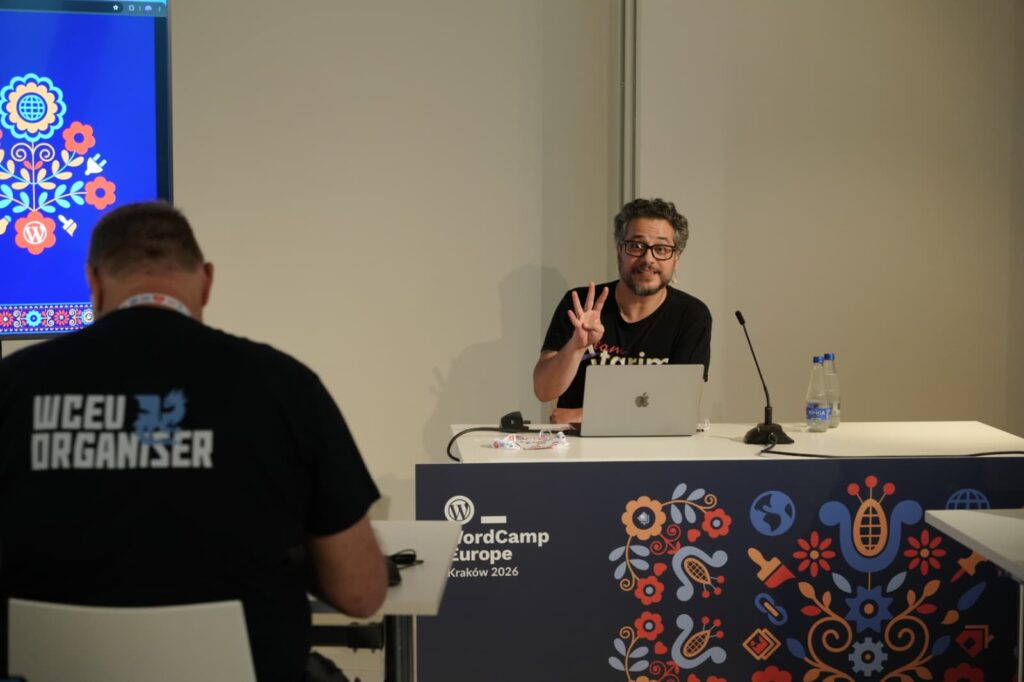
Łukasz: How is the relationship between agencies and their clients changing as clients can do more with AI on their own?
Vito: Clients are trying to do more on their own, and agencies are feeling it. There is a 20i survey finding that 76% of agencies say they have already lost work to AI – and that threat is real. But the actual numbers tell a more nuanced story. That same period, Google ran an internal analysis on people who migrated from WordPress to Lovable. What they found is that three months later, those same people moved back to WordPress. The first shot with AI has a big wow factor, but as you start diving in, you hit the limits fast. What really tells me the panic is ahead of the reality is this: the activation rate for small business owners using DIY tools before AI was around 20%. With AI, it is still around 20%. It has not moved. So 80% of people who try to build on their own still cannot get it done. For more than 20 years, this industry has been promising one-click websites. I have never seen one yet – even with AI.
Łukasz: Last year was the first time WordPress actually lost clients. Is that a turning point?
Vito: It could be, but history says you usually get more of a technology when it evolves, not less. WordPress 7.0 just released. The first steps toward AI-ifying WordPress are already happening – the Connectors and Abilities API is going to bring an influx of new tools into the ecosystem. At Atarim, we are working on something we call the AI Web Agency, which allows clients to self-serve on their existing website so they do not drop off and go elsewhere. The install base is massive. The tooling is catching up to match what users now expect.
Łukasz: Atarim started as a visual feedback tool six years ago. How did AI change the product?
Vito: We took the feedback infrastructure we built when humans were doing all of this work and placed agents at the end to do exactly what a client used to do – click around, make a request, get it done. You can come in, click on something, say “make this bigger” or “change this text,” and the agent responds with what it would change and asks if you want to proceed. The feedback cycle still exists. The difference is that what used to be delegated to people is now delegated to agents. We are also platform agnostic now – the same thing works on Lovable, WordPress, Shopify. I have been tracking this space since 2019. I was one of the first thousand people with access to GPT-2, and I built the first AI integration in WordPress in 2020, before ChatGPT existed. If you lean in early, you stay ahead instead of catching up.
Łukasz: You have 50,000 agencies using Atarim with 1.6 million clients and team members. What is changing?
Vito: We are seeing fewer team members per agency. And even our own business model is adapting to that. Seats is the SaaS model of the last decade. It is not the model of the next decade. The way to think about it now is that dev hours get replaced by credits or tokens. As long as you can let your business expand through credits, seat count matters less. The equation is shifting, and every agency pricing model built on headcount needs to account for that.
Łukasz: How do you get a new client to actually trust the product during onboarding?
Vito: You stack value points and wow moments throughout the first experience. The user needs to say “wow” a few times in the first ten or fifteen steps before you ask them to do anything difficult. I think of it as candy and vegetables. Show someone their brand kit in the first instance, before they have done much at all – their colors, their business goals, their value proposition, already surfaced. That is the candy. Then you ask for the email and the password. That is the vegetable. Another candy, another vegetable. It bounces back and forth until you have built enough trust to get them fully activated. Compare that to installing WordPress and landing on the gray admin screen. That is all vegetables, no wow, and no one knows what to do next. The industry has been doing that for years and wondering why activation is low.
Łukasz: Why are clients actually leaving agencies for AI tools?
Vito: A big part of it is a broken value perception. Most agencies have what we call care plans – the client pays a retainer, the agency updates plugins and handles requests when it has time. The agency thinks it is selling insurance. The client thinks they are paying a tax. That is a complete break in how value is understood on both sides. Until agencies realize that what they are giving their clients feels like a tax and not insurance, clients will keep trying to replace them with something else. The other part is speed. The entire industry is built on a 72-hour SLA. You make a request, three days later it is done – if it is not the weekend, if there is no backlog, if a dozen other conditions are met. That model is completely broken. Clients expect everything on-demand now. We need to reduce the time to execution from a 72-hour SLA to 1.2 seconds. That is not a product feature. That is a fundamental shift in how agencies need to think about their service.
Łukasz: What does the agency of the next decade actually look like?
Vito: Look at who the vibe coders actually are. They are us from 15 years ago. When drag-and-drop tools arrived, more than a million new professionals entered the web industry. I think another million is coming in through AI tools. That means more competition, but it also means more work being done overall. It is not that there is less work – there are just more professionals sharing the same pool of clients. The agencies that adapt will not just survive. They will run much larger operations than before. I call that the mega agency. Think HubSpot-sized operations: 100 people managing 100,000 clients, instead of needing to hire a new body every time you win a new project. Look at what happened in customer support. A few years ago you needed 100 people to run it, and every new customer meant more headcount. That grew linearly. Then AI changed the equation. Now five people can do what 100 used to do. The same transformation is coming to web agencies. AI handles the 70 to 80 percent. The professional manages the relationship, applies their deep expertise, and reviews the output. If you are good at design, you review the design and let the AI handle SEO. If you are good at SEO, it goes the other way. The ones who will not survive are those trying to do everything manually on long delivery cycles. The ones who lean in can serve far more clients with the same or smaller team.
Łukasz: You have six AI agents in Atarim. Which ones genuinely deliver and which are still closer to a demo?
Vito: The way we build agents is not to invent anything. We look at what team members a creative operation actually needs: a project manager, a designer, someone for SEO, someone for UX and accessibility, a developer, someone for content and brand. Each agent bridges the gap for what the human in the agency is not strong enough to do. If you are really good at something, you are probably better than the AI at that specific thing. The idea is not to replace your expertise but to augment it with the other five disciplines you do not have. There is also something important about the escalation layer. Vibe coding tools let clients do a lot on their own, but there is no escalation path when they get stuck. That is exactly what we are building: self-serve within the right guardrails, with a professional available at the moment the client needs more than the tool can handle.
Łukasz: You have run the Web Agency Summit for six years. What question comes back every single year?
Vito: How do I get more clients? Every year. But the answer has been clear for a long time. Do good work. Niche down so you develop real expertise within a specific group. And interact with your clients like a human being – you are there to add value, not to extract revenue. Revenue is just the outcome of providing more value than you take. The agencies that grow naturally do three things consistently: they niche down, they stay in regular contact with clients, and they obsess over shortening delivery time. That last one matters more than most people realize. If I finish one project a month and I do good work, I earn a referral roughly every three projects. If I do three projects a month, I triple my speed through the referral flywheel. Shorten delivery from four weeks to one and a half weeks and you have tripled your ability to grow through referrals without spending anything on marketing. That is the number one driver of new business for web professionals, and most of them are sitting on a much slower version of it than they need to be.
Łukasz: Last question. Three minutes, a hall full of agency owners, every one of them will listen and act. What do you say?
Vito: Lean in. Do not be afraid. Change is coming whether you like it or not. The line about “you will not be replaced by AI, you will be replaced by someone using AI” has become a cliche, but it is true. The way I think about it: you cannot talk to the person digging the pit and explain how to operate the tractor. They need to want to operate the tractor first. Because the person on the tractor replaces the ten people in the pit. That shift is already happening. Some roles will disappear. That is not really up to us anymore – it is just technology moving. But there is still a place for people. It is just a different place, with different tools. And here is the thing that really gets me. There is a medical study of about 10,000 people who were told they would die unless they made one specific change in their life – fully within their control. More than 90% of them still did not make the change. So be the ten percent. You know what needs to change. The only question is whether you will act on it.
Photography: Nilo Vélez, Jeroen Potty
