
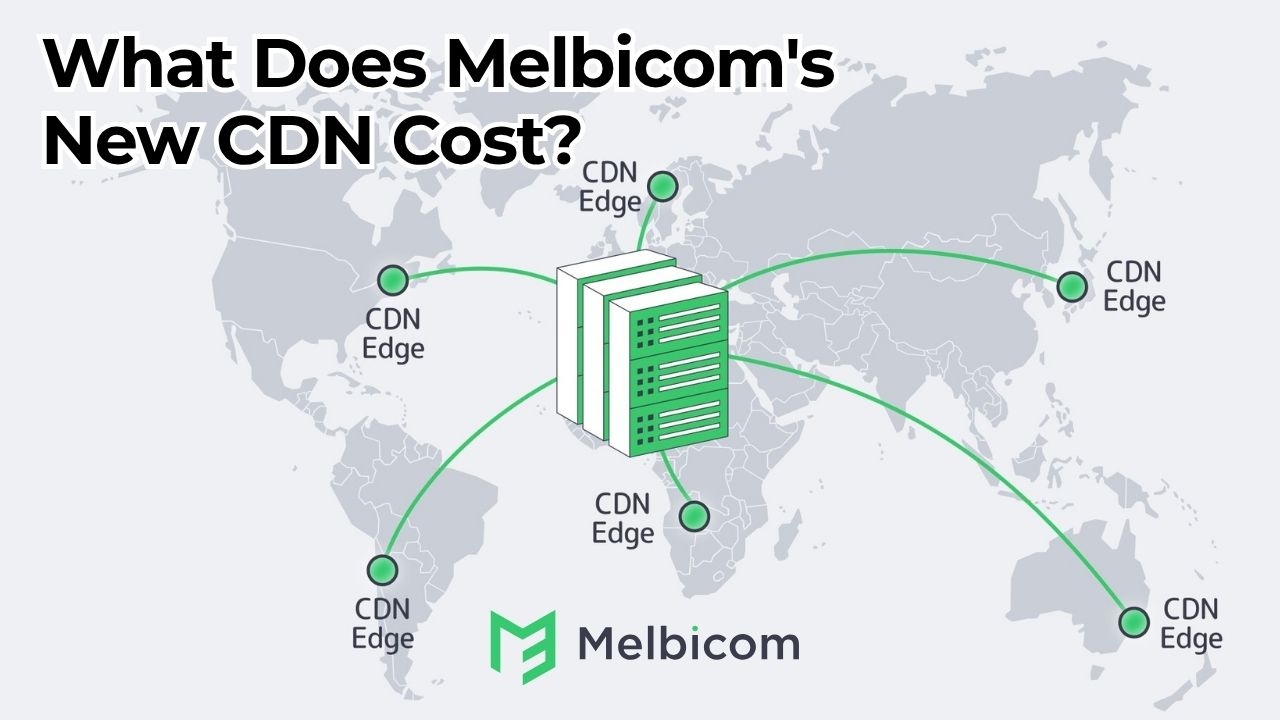
Melbicom, the Vilnius-based infrastructure provider, launched a new set of CDN plans on August 19: a Premium network of 39 points of presence in 35 countries and a separate 12-location Volume network for bulk delivery. The headline Premium Go rate of 0.03 euros per gigabyte is real, but it comes with a map: Melbicom’s zone list assigns that entry rate to 55 of the 251 territories it classifies. At the entry tier, delivery to the other 196 territories costs three to five times that rate.
Key facts
- Premium: 39 PoPs, 35 countries, six continents; entry rates of 0.03 to 0.15 euros per GB by zone, with Zone 1 falling to 0.015 at higher volumes.
- Volume: 12 PoPs; pay-as-you-go from 0.005 down to 0.002 euros per GB, minimum 50 euros a month including 10 TB.
- Zone map: Zone 1 covers 55 territories, Zone 2 covers 121, Zone 3 covers 75, by our count of the published list.
- No per-request fees across the portfolio, per Melbicom; cache-fill traffic is free, the company confirmed to us in writing.
- Intro offers run until November 1, 2026.
Two Networks, One Prepaid Pocket
The Premium network, sold pay as you go under the name Premium Go, prices by destination zone and monthly volume: Zone 1 runs from 0.03 euros per GB down to 0.015 above 100 TB, Zone 2 from 0.10 to 0.09, and Zone 3 holds flat at 0.15 regardless of volume. Above a petabyte, pricing moves to individually quoted Enterprise terms, which can also mix both networks by zone.
The Volume network is the bulk lane. Volume Go starts at a 50 euro monthly minimum that includes 10 TB, then steps from 0.005 euros per GB down to 0.002 above a petabyte. Two flat plans sit alongside: Volume Plus 100 at 400 euros a month with 100 TB included, and Volume Plus 500 at 1,500 euros with 500 TB. The self-service plans draw on one CDN Prepaid Pocket, a dedicated money balance funded from account credit; transfers into it are free and reversible, and only CDN charges touch it. Usage metering counts only bandwidth delivered from the CDN edge, with no per-request fees. Vincent Royant, Melbicom’s Chief Marketing Officer, described the logic behind the two-network structure in the launch press release: “Predictable billing starts with matching the commercial model to the traffic.”
The Zone Map Sets the Destination Rate
The advertised entry rate of 0.03 applies to Zone 1, and Melbicom publishes exactly which countries and territories it covers. By our count of the company’s zone list, effective June 25, 2026, Zone 1 holds 55 territories, including the large Western European markets, the United States, Canada, Turkey and Russia. Zone 2, at 0.09 to 0.10 euros per GB, holds 121 territories, among them Japan, Australia, Singapore, Hong Kong, India, Brazil, Mexico and the United Arab Emirates. Zone 3, at 0.15, holds 75, including China and Egypt.
Some classifications are worth checking before signing: at the entry tier, Denmark and Finland sit in Zone 3 at 0.15 euros per GB, while Sweden and Norway sit in Zone 1 at 0.03. The published list states each classification and its effective date, but does not describe how zones are assigned. Asked how customers learn when a country moves between zones, the company told us reassignments are published in the same public list, “together with the date on which the new classification takes effect.”
Cache-Fill Is Free, No CDN SLA Is Published
One billing question the published materials left open was cache-fill: whether traffic from the customer’s origin to Melbicom’s edge counts toward the bill. In written answers to our questions, Royant clarified: “We do not charge for traffic from the origin to our edge locations. Customers are billed only for traffic delivered from the CDN edge to their end users.”
Melbicom’s master service agreement contains no CDN-specific availability or traffic-metering terms, and the CDN pages and their FAQ do not publish an SLA either. Buyers who need contractual uptime guarantees will therefore need to ask whether one is available under their chosen plan.
The Feature Set and a November 1 Deadline
The published feature set covers familiar CDN functions: instant global purge, origin pools for failover, Let’s Encrypt or bring-your-own certificates, geo request routing, path-based caching, cached HLS and DASH video delivery, real-time analytics and raw logs. Origins can be Melbicom’s own servers, its S3-compatible storage or external infrastructure. Until November 1, 2026, two one-per-client intro offers run: a 20 euro Premium Go credit and a 50 euro Volume Go discount.
About the Data
Pricing, plan terms and features come from Melbicom’s CDN pages and launch announcement. The zone split of 55, 121 and 75 territories is our count of the 251 entries in the company’s published Region and Zone List, effective June 25, 2026. We reviewed the master service agreement in full for its availability and traffic-metering provisions. Vincent Royant’s remark on plan design comes from the launch press release, provided by the company; his answers on cache-fill billing and zone-change communication come from his written responses to our questions.

Sources
- Melbicom Introduces New CDN Plans - Melbicom (official announcement)
- News and Announcements - Melbicom (news listing, carries the August 19 date)
- CDN - Melbicom (product page)
- Country Region-Zone Mapping - Melbicom (zone list, PDF)
- Master Service Agreement - Melbicom (legal)
- CDN Quick Start - Melbicom (documentation)