
The 2025 edition of State of the Word wrapped this week in San Francisco, and for the first time, the keynote synced with a major WordPress release. That’s right. WordPress 6.9 dropped live during the event, adding a dose of adrenaline that no blog post could replicate. This also marked the 20th State of the Word since Matt Mullenweg’s inaugural address in 2006. What began as a segment inside WordCamps has grown into a focused, standalone event that brings together the most influential voices in the WordPress ecosystem.
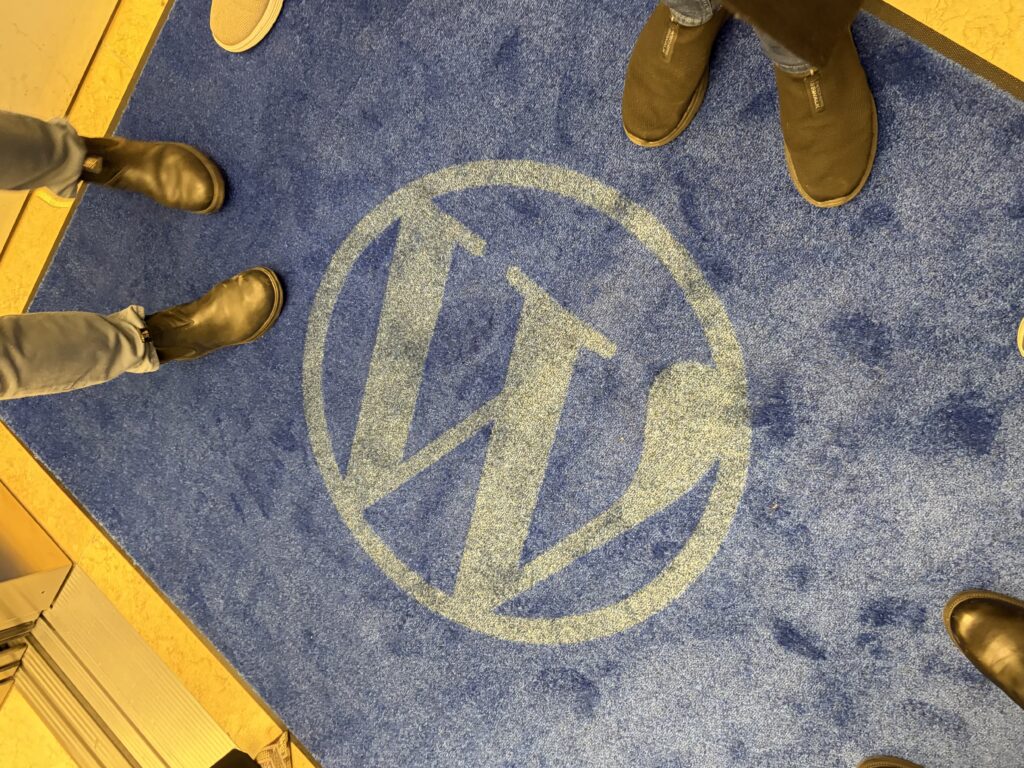
Hosted in an undisclosed, sky-high location with panoramic views and minimal distractions, this year’s State of the Word leaned harder than ever into exclusivity. As an invite-only gathering, it’s always had a bit of a velvet-rope feel, but 2025 took it further. No photos of the venue were allowed. Only the sweeping view was permitted, which we’ve included below. Adding to the air of secrecy was an unexpected twist: low cell signal made live reporting nearly impossible. After our initial post on LinkedIn, coverage stalled thanks to connectivity issues. And if you were hoping to follow along online, the livestream didn’t deliver much either – it was effectively dark. All of this served as a timely reminder that even in a world obsessed with cloud infrastructure and real-time everything, tech can still go dark. Just ask anyone who experienced the Cloudflare hiccup a few weeks earlier.

Who Was in the Room
The guest list this year read like a blueprint of the WordPress economy – from the creators to the infrastructure powering it. Elementor and Beaver Builder brought their CEOs / Founders, showing that the page builder space is staying close to Core development. Hosting companies like Bluehost, InMotion, and Hosting.com sent product and marketing execs, while players like Convesio and Blackwall added perspective from the performance and security front lines. Porkbun showed up to represent the domain crowd, and 10up was in the room with agency-side leadership. Even Google had boots on the ground, along with a full bench from Automattic, including board members and executive leadership. This wasn’t just a community check-in. It was a curated gathering of the people who actively shape what WordPress is, and what it will become.
Before the keynote even began, Matt Mullenweg made it a point to personally greet every attendee in the room. Whether you were a hosting exec, a plugin founder, or a first-time attendee, Matt made you feel like you belonged in that room. It was a quiet, intentional gesture that reminded everyone this project, at its core, is still about people. And in a space packed with industry heavyweights, that kind of leadership set the tone before a single slide went up.
The Keynote Address
Mary Hubbard opened with reflections on her first year as Executive Director of the project. Her stories focused on people, users turned contributors, contributors turned leaders, and the human backbone behind the software.
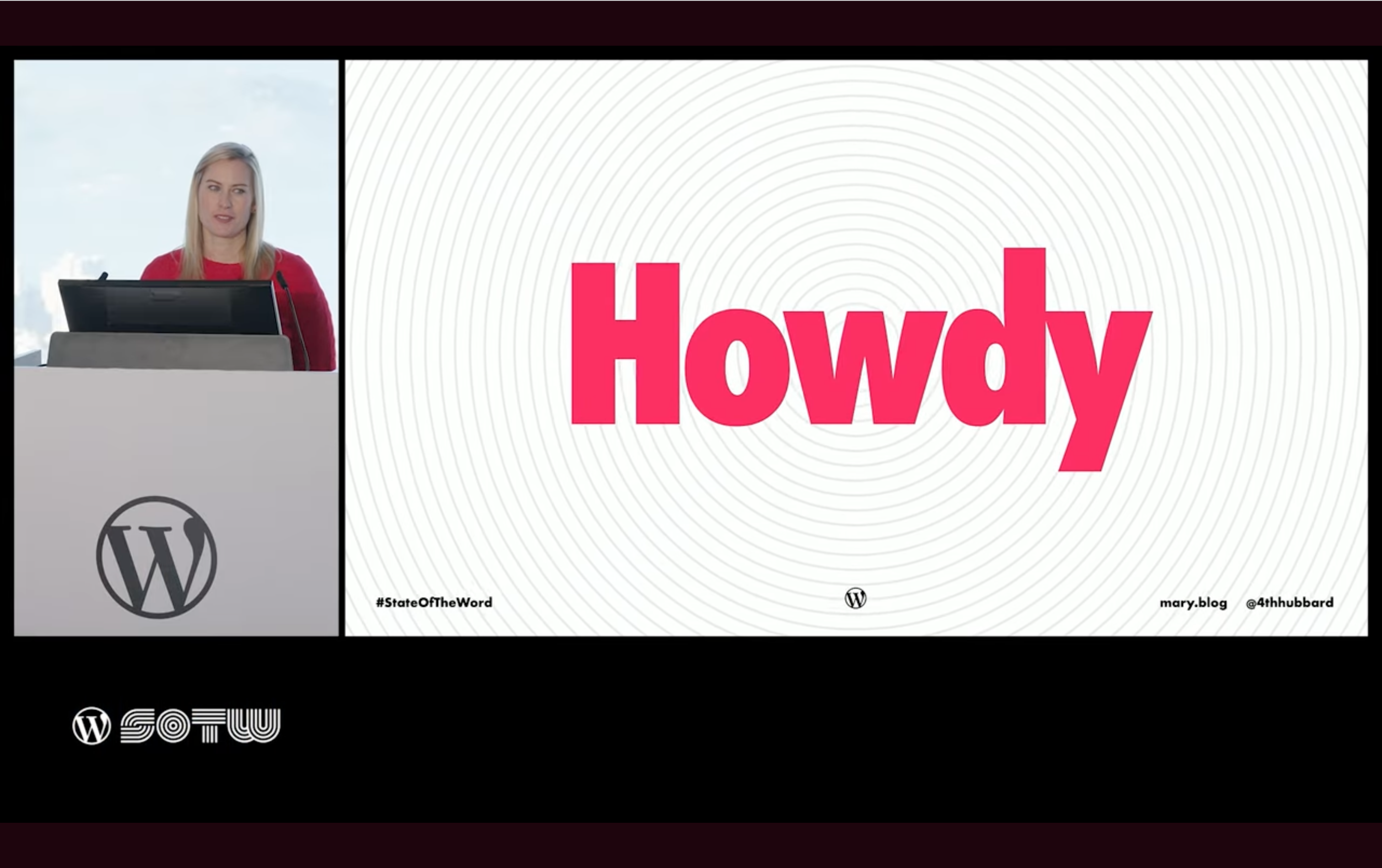
“I’ve met people using WordPress to unlock new careers. I’ve met contributors who started a single translation or forum post and are now leading major pieces of the project. In LatAm, Europe, and the States, I’ve seen students get access to WordPress tools and start building faster than we could have ever imagined. I’ve watched communities build in public, resolve disagreements in the open, and collaborate across languages and time zones.”
Mary Hubbard – Executive Director Automattic
WordPress by the Numbers
When Matt took the stage, he shared the kind of numbers that make you sit up and take notice. WordPress now powers over 60% of CMS-based websites globally, and nearly 50% of the top 1,000 websites run on WordPress. Plugin growth exploded in 2025, with over 60,000 plugins available and counting. And Japanese has become the second most-used language across WordPress installs.
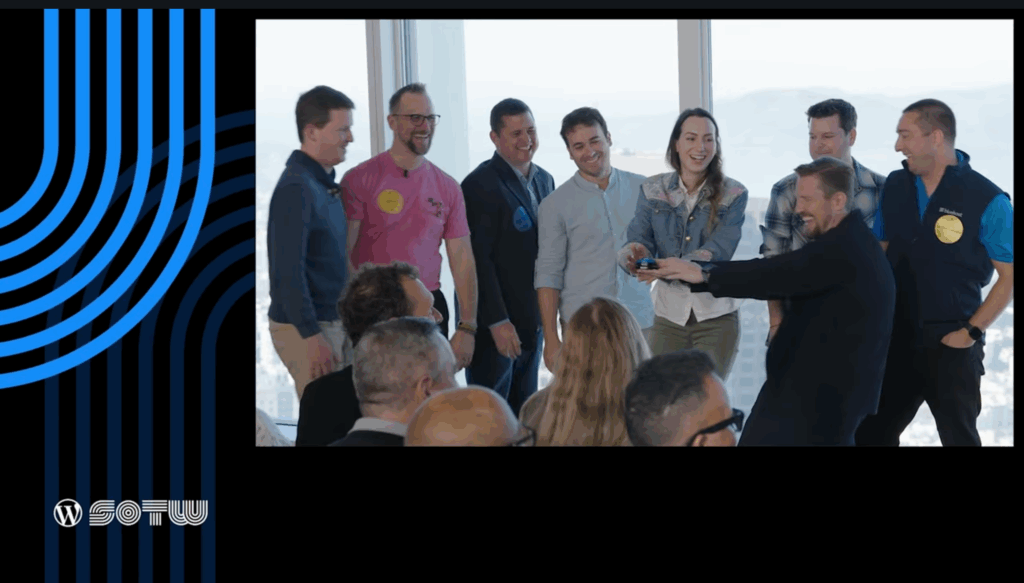
The mic-drop moment came mid-keynote when Matt and team released WordPress 6.9 live, in real time. Within an hour, over 700,000 sites had updated. No drama. Just scale, precision, and community trust.
Community & Education — WordPress’ Real Foundation
Mary Hubbard returned to the stage and brought the spotlight back to the heart of the project: its people. As she put it, “Behind all the tech, it’s people who make WordPress happen—one day, one release, one event at a time.” Education is becoming the connective tissue that transforms awareness into action. WordCamps hit record numbers in 2025, with 81 events across 39 countries and over 100,000 attendees, but that’s just the surface. The real momentum is coming from platforms like learn.wordpress.org, which served over 1.5 million users this year and saw a 32% spike in engagement following WordCamp US.
To illustrate just how deeply education is being embedded globally, Mary invited Stephanie Garita Johnson to the stage to share her work with the University Fletes in Costa Rica. The school has formally integrated WordPress into its academic curriculum for the computer systems engineering program, creating real pathways for students to contribute to open source projects and earn academic credit. Through initiatives like WordPress Campus Connect San José and the student-led Fidelity Test Club, they’re not just learning to use WordPress—they’re learning how to lead with it. These programs emphasize hands-on learning, applied research, and real-world problem-solving, preparing students not just for jobs, but for purpose-driven roles in the global open-source economy.
Inside WordPress 6.9
For those watching the GitHub repo, the 6.9 release wasn’t a surprise. But rolling it out live during the keynote sent a signal: this is a mature platform with startup energy.
The release introduced features like collaborative editing with “Notes,” UI improvements for hidden blocks, and dozens of developer-focused enhancements. Core contributors also introduced the Abilities API for permissions, the HTML API for safer markup control, and an Interactivity API that makes WordPress sites feel more app-like, without tacking on external frameworks.
The AI Shift is Already Here
AI took center stage during a dedicated panel featuring Matt, Mary, Jeff Paul (10up), Felix Arntz (Google), and James LePage (Automattic Head of AI). From Jetpack to Elementor, AI features are already baked into user experiences, not as gimmicks but as actual time-saving tools. Telex, WordPress.com’s AI-powered block editor, is already in beta. It’s not here to replace developers or designers; it’s here to assist them and shave hours off build time.
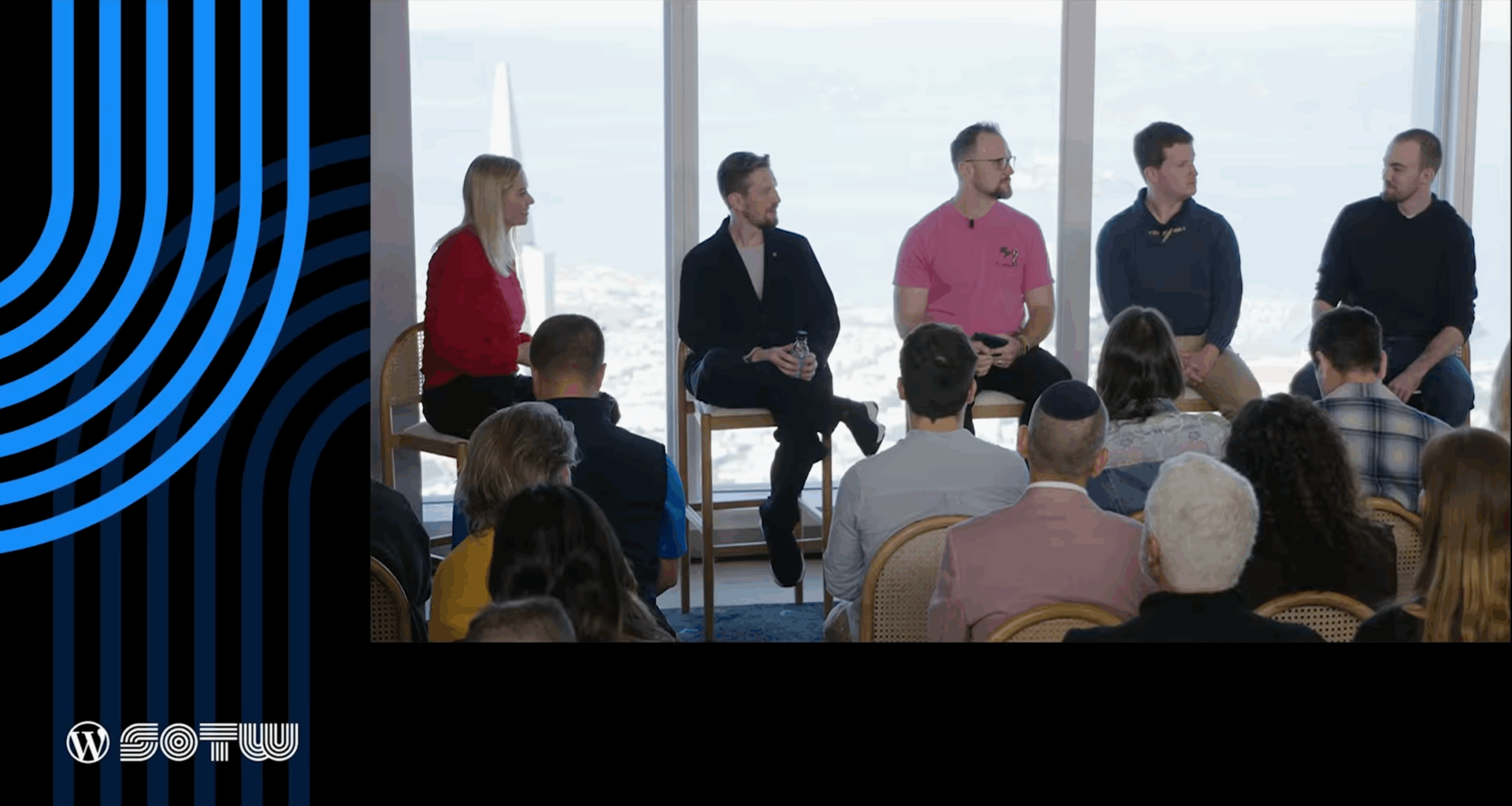
State of the Word Goes Double Live
In the final surprise, Matt announced that we would be going live on a daily YouTube channel called TBPN. When asked, Matt revealed his word of the year: Freedom – a nod to both the philosophical roots of open source and the ongoing battle against closed platforms. The TBPM hosts asked Matt about Automattic Beeper platform and discussed Social Media walled gardens.
What Industry Leaders Are Really Saying
The story didn’t just unfold on stage, it continued afterward. That’s where vision turned into strategy, and strategy sparked real momentum.
As the formalities wrapped, the vibe shifted. Jazz played softly in the background, drinks clinked, and small plates made their rounds. It was in this laid-back but charged atmosphere that we caught up with some of the most influential voices in the WordPress and hosting space. We asked what’s next, what’s missing, and what they really think about where the industry is headed.
Inmotion Hosting
Carrie Smaha, Head of Marketing at InMotion Hosting, described the event as a rare opportunity to absorb both strategic direction and tactical inspiration without the noise of larger tech conferences.
“There’s no cost investment to attend SotW. It’s not like sponsoring a giant booth,” she said. “What the event offers is exclusive access to thought leaders and valuable insights that can be brought back to my team, like the recommendation to bundle AI credits with hosting plans.” Carrie emphasized the timeless power of thoughtful content, reminding us that even with AI on the rise, fundamentals still matter. “I still strongly believe in content. SEO, citations, AIO, GEO – whatever acronym you use, it all comes back to solid, thought-led content.” She also shared her vision for the future for WordPress, introducing more schema markup. “In addition to content clarity, schema is just as important for SEO as it tells crawlers the context around the content. Is it a product or service, business entity, Q&A? The semantics should be part of the foundation, without just relying exclusively on plugins. I think that will be important especially for Woo-powered e-commerce sites and how products appear in AI searches.”
Hosting.com
At Hosting.com, product manager Katie Richards saw this year’s State of the Word as more than just a check-in, it was a strategic reset. For her and her team, being in the room was a form of confirmation that they’re building in the right direction. “This event is about validation,” she said. “We can walk away and say, ‘We’re aligned with where WordPress is going.’ That’s huge.”
Katie emphasized how valuable it is to hear firsthand how the core team and ecosystem players are thinking – not just about the next release, but about the longer arc of where WordPress is evolving. It’s this clarity that helps internal teams prioritize features and prepare for what’s coming. “We’re not guessing,” she said. “We’re syncing up.”
When asked what she’d love to see addressed next, Katie didn’t hesitate: the WordPress admin interface. “Updating the admin side would be really valuable, not just visually, but also in how things are architected under the hood,” she said. For Katie, a modernized backend isn’t just about aesthetics, it’s about improving workflows, reducing friction for new users, and making the platform more intuitive for a broader range of use cases. It’s a critical upgrade that, in her view, could amplify the value of every other innovation happening in WordPress.
WonderlandCurious
Raquel Manriquez, founder of WonderlandCurious, spoke passionately about cultural identity within the WordPress community. For her, it’s time to move away from the underdog narrative and toward something more self-assured, modern, and magnetic. “We need to bring the cool kids back to WordPress,” she told us. “Let’s be inclusive and aspirational.” She noted that WordPress often attracts builders, engineers, and optimizers, but rarely creators who want to be seen as such. That’s part of what she’s working to change.
Her new event, PressConf, now in its second year is designed to do just that. It’s a high-level experience for the founders, marketers, and executives driving WordPress forward. No expo halls. Just focused, strategic conversation. “No recordings. Just raw, real, revolutionary conversations,” she said. The goal is to foster a space where the people making money and decisions inside the WordPress economy can step back, zoom out, and think about what’s next. In her words, “It’s not anti-community. It’s post-community.” PressConf isn’t meant to replace WordCamps, but to sit beside them, offering something sharper, more candid, and desperately needed. We hope to see you there – Tickets and Sponsorships are now available: https://pressconf.events
Blackwall
Robert Jacobi, CXO at Blackwall, offered one of the most grounded takes of the evening, focused not on trends, but on hard truths. “Security has become reactive,” he said. “Everyone is waiting for something to happen, and then they fix it. That doesn’t scale.” He pointed to the sheer volume of automated threats overwhelming the web today. “Over 50% of internet traffic is bot traffic,” he emphasized. “We need multi-layered AI solutions—not just firewalls and plugins. Actual AI infrastructure that can identify, adapt, and defend in real time.”
But Robert didn’t stop at security. When asked for one change he would like to see, he focused on WordPress’ architecture: the database. “It’s the same database structure from twenty years ago,” he said. “It’s not normalized, it’s not optimized, and it’s why we see performance drag across even small sites.” His vision is clear: WordPress needs a ground-up rethinking of how it handles data, something leaner, smarter, and built for the way modern applications are deployed and scaled.
He also challenged the community to stop thinking of performance and security as afterthoughts or plugin checkboxes. “These aren’t ‘nice to haves,’” Robert said. “They’re the foundation. If we don’t modernize, we’re not just holding back WordPress — we’re holding back the internet.”
Convesio
From a very different angle, Tom Serani, CEO of Convesio, is going all-in on infrastructure, specifically where AI meets DevOps. While many in the WordPress space are focused on content creation tools and site builders, Tom is taking a more foundational approach. “We’re not building a site designer,” he said. “We’re building AI for sysadmins. Thirty times faster resolutions. That’s where hosting wins.”
Tom explained that Convesio is investing heavily in machine learning models designed to detect and remediate issues before they ever reach the customer, from load balancing anomalies to plugin-related failures. The goal is to move from reactive support to predictive uptime management. “We’re talking about AI that doesn’t just alert you to problems. It fixes them in real time or, better yet, stops them from happening in the first place.” For Tom, the win isn’t flashy UI – it’s invisible stability. The kind of reliability that users never notice, because it just works.
Automattic
Jesse Friedman, Head of WP Cloud at Automattic, focused on first impressions. According to him, the first 15 minutes of a WordPress user’s experience determine whether they stay or walk away. “Every host, plugin, and agency has a responsibility to make that first experience count,” he said. Jesse is advocating for a universal onboarding schema, a shared framework that plugins and platforms could use to collect user preferences just once. This would eliminate the redundant setup flows that currently plague the user experience, where every plugin asks the same questions and forces its own disconnected onboarding. “If we can unify that experience,” he explained, “we reduce friction, increase engagement, and help users see the value of WordPress faster.”
He also highlighted the importance of broader ecosystem collaboration through initiatives like the i2Coalition and the Secure Hosting Alliance, which bring together hosting providers to establish shared standards around performance, security, and compatibility. “The i2Coalition is about uniting cloud providers around open principles,” Jesse said. “And the Secure Hosting Alliance is a commitment to making WordPress Hosting better, faster, and more secure for the millions of users who rely on traditional hosting every day.” For Jesse, the future isn’t just about better infrastructure, it’s about shared accountability across the ecosystem.
Sanja Grbic, Lead Product Designer at Automattic, brought a refreshing and deeply thoughtful design-forward perspective to the event. While much of the conversation around AI centers on content or infrastructure, Sanja’s focus is on how AI can elevate the experience of building on WordPress. “AI can become your site’s co-pilot—like hiring a designer who never sleeps,” she said. But for her, it’s not about automating creativity out of the process. It’s about making creative freedom more accessible.
She explained that her team is working to reimagine the interface itself – rethinking how users interact with WordPress blocks, layouts, and even typography. The future she envisions includes AI-infused design guidance: intelligent nudges, layout suggestions, accessibility checks, and even subtle coaching that helps users make better visual decisions without needing to know the rules of design.
“AI shouldn’t flatten everything into sameness,” she said. “It should expand what people feel confident enough to create.” Sanja wants WordPress to remain a playground, not just for developers, but for artists, entrepreneurs, and everyday users who want to build something that feels truly theirs. Her team’s goal is to use AI to unlock more originality, not just more output.
Finally, James Grierson, Head of Global Expansion at Automattic, pulled the conversation back to a foundational issue- connection. “AI helped us go global faster and smarter,” he said, referencing how intelligent systems have accelerated Automattic’s ability to scale into new markets with speed and precision. But as the platform expands, James sees a missing piece that’s critical to its next chapter.
“What WordPress really needs is an engagement layer—a discovery network. Bringing back that feed to WordPress,” he said. Right now, WordPress is exceptional at helping people publish, but it offers almost nothing to help users discover what’s being published. There’s no central place to browse, follow, or engage with content across the ecosystem. For a platform that powers more than 40% of the web, that’s a glaring opportunity.
For James, the future of WordPress isn’t just about tools, it’s about reconnecting the ecosystem. A feed wouldn’t just surface great content; it would reintroduce serendipity, amplify voices, and give users a reason to come back – not just to build, but to belong.
The Wrap-Up
State of the Word 2025 was more than a recap. It was a declaration. WordPress isn’t just surviving; it’s setting the pace. Core innovation is thriving, and AI isn’t coming, it’s already here, quietly making your site smarter and your workflows faster.
Because at its heart, WordPress isn’t a product. It’s a community. A mosaic of builders, freelancers, agencies, corporations, educators, and dreamers. And in 2025, that community showed us something: that together, we’re not just building websites. We’re building the future of the open web.
Couldn’t make it? You can still catch the keynote on YouTube. But if 2026 is anything like this year, you’ll want to be in the room.

Jason Nickerson
With over 20 years of experience building and shaping the web, Jason Nickerson has worked across just about every corner of the industry. Jason’s career has mirrored the internet’s evolution — from the recovery after the .com crash to the open-source movement and the rise of cloud services that power the web today.