
BalticNOG is not yet two years old. The group was established in December 2024, held its first meeting in Vilnius nine months later, and moves to Riga for its second edition on September 23 and 24. That first meeting drew 220 attendees, and the organizers expect around 400 in Riga. Before it existed, operators in Lithuania, Latvia and Estonia had no dedicated regional forum of their own, even though they face many of the same operational challenges.
We put seven questions to Paulius Judickas, Chairman of the Board, about what it takes to build a genuinely regional community, what BalticNOG does not want to become as it grows, and why participation from hosting, cloud and data center companies remains limited. The overlap matters: topics including routing security, peering, address management and DDoS mitigation directly affect the infrastructure hosting providers depend on.
webhosting.today: How did the idea for BalticNOG start, and was a Lithuania-only group ever on the table?
Paulius: The idea developed naturally while we were attending industry events and NOG meetings around the world. Over the years, we saw firsthand how valuable these communities are. They give network engineers and operators a neutral space to exchange practical experience, discuss shared challenges and build relationships that last well beyond a single event. Countries far smaller than ours, and with far shorter internet histories, had built strong local NOG communities. The Baltic states never had anything like that. Operators here had no dedicated forum to gather, compare notes or troubleshoot problems together, so we decided to build one ourselves.
An LTNOG-only version was seriously considered early on, and honestly, it would have been the simpler path. Organizing within one country, one language and one existing network of contacts is much easier. But given the size of our individual markets, our geographic proximity and our shared history, a regional initiative made far more sense. Bringing Lithuania, Latvia and Estonia together creates a much larger and more diverse pool of experience, perspectives and technical knowledge. Instead of hearing the same story three times in three separate national groups, everyone gets three different perspectives in one room. That diversity is exactly what makes the event worth attending.
webhosting.today: How many people actually came to the first edition, and what surprised you most once the idea met reality?
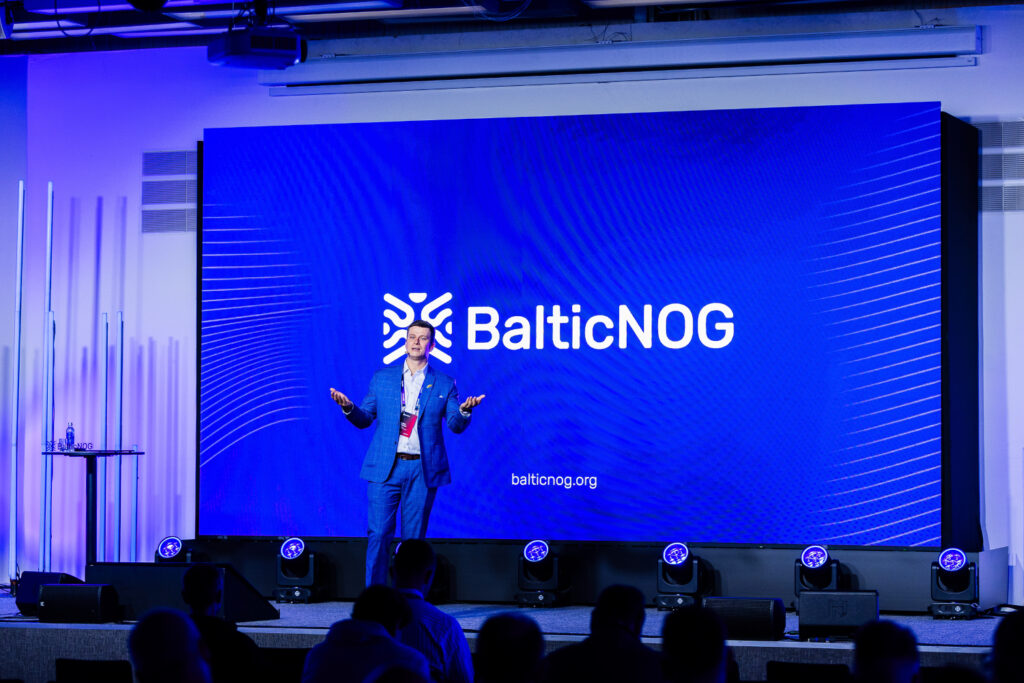
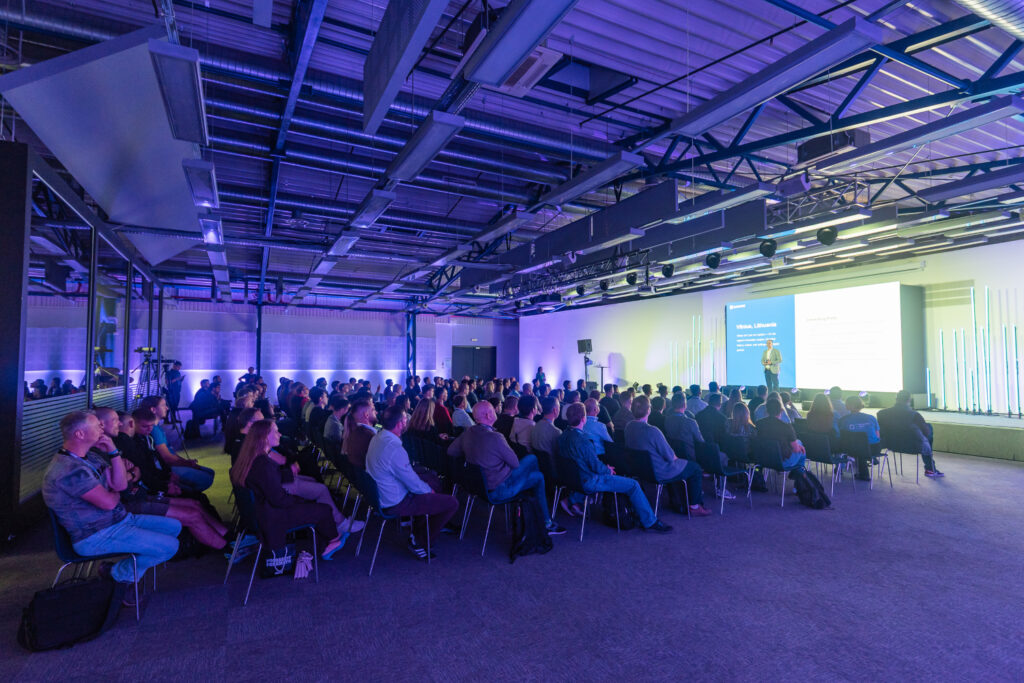
Paulius: The first BalticNOG drew 220 attendees, which was a very encouraging result for an inaugural event in a market this size. It confirmed the demand was real and that the networking community was ready to support a forum like this.
The biggest surprise wasn’t the turnout. It was how hard it proved to attract attendees from the neighboring countries. On paper, three small, geographically close countries with similar infrastructure histories should make cross-border attendance straightforward. In practice, the professional communities are still quite separate. People participate in their own national networks, attend their own established events, and stick to circles they already know and trust. It showed us that building a truly regional community takes more than putting “Baltic” in the event’s name. It takes sustained outreach, local involvement and genuine trust-building in all three countries. That’s exactly what we’re focused on now, and we knew from the start it would be a multi-year effort rather than something one successful edition could solve.
webhosting.today: What would have to happen in Riga for you to call BalticNOG a genuinely regional community?
Paulius: For us, regional means much more than moving the venue from one capital to another. It has to show up in who’s in the room and who’s on stage. Riga will feel like real progress if we see balanced participation from all three countries, in attendees, speakers and partners. Attendance numbers matter, but engagement matters even more.
Success would also mean seeing Lithuanian, Latvian and Estonian operators openly exchanging experience, forming new working relationships and continuing those conversations long after the event ends. We want the community to stay active beyond the annual meeting itself, with people sharing knowledge and collaborating throughout the year rather than reconnecting only once every twelve months.
Most importantly, the event should not feel like a Lithuanian initiative being hosted in Riga. It should feel like a shared Baltic project, with each country having a real voice and a sense of ownership. When that happens, we’ll know we’ve built something genuinely regional.
webhosting.today: What do you expect the Baltic networking community to be dealing with a year from now that it isn’t dealing with today?
Paulius: Many of the fundamental challenges will stay the same, but their scale and urgency will keep growing. Network security and resilience will become even more important, particularly given the geopolitical situation in our region. Operators will need to think about more than preventing attacks and outages. They’ll need to maintain essential connectivity under increasingly complex conditions, plan for scenarios that seemed unlikely a few years ago, and coordinate with each other when incidents cross borders. Resilience is quickly moving from a technical checkbox to a strategic priority, and we expect that shift to accelerate.
We also expect much more discussion around automation, the practical use of AI in network operations, and the growing complexity of managing infrastructure that spans on-premises, cloud and edge environments. Traffic patterns keep evolving too, driven by cloud adoption, streaming and AI-related workloads, and that puts new pressure on capacity planning, interconnection and data center infrastructure across the region.
The other big challenge is people. The Baltic markets are small, and experienced technical specialists are in high demand everywhere, not just here. Companies compete for the same limited pool of talent, and knowledge often sits locked inside individual organizations. Sharing that knowledge, developing new talent and making operational expertise accessible across organizational and national boundaries will only become more important over the next year. That’s exactly where a community like BalticNOG can make a real, measurable contribution.
webhosting.today: From a network operator’s perspective, how similar are Lithuania, Latvia and Estonia really, and where are the biggest differences in their priorities?
Paulius: All three countries followed a broadly similar path after regaining independence 35 years ago. Each had to build or modernize its networks almost from the ground up, without the legacy infrastructure that older markets had to work around. In a way, that was an advantage. It created technically capable communities with a strong culture of finding practical solutions quickly, unburdened by decades of accumulated technical debt.
That said, the three communities remain more isolated from each other than an outside observer might expect. Operators largely work on separate national projects, in different business environments, with different regulatory contexts, market structures, interconnection landscapes and customer needs. Naturally, all of that produces different priorities. What’s urgent in Tallinn isn’t necessarily what’s urgent in Vilnius or Riga.
We genuinely see that separation as an advantage rather than a weakness. Each country has developed its own experience, its own approaches and its own areas of expertise. When operators from all three sit down together at BalticNOG, they’re not repeating the same experience back at each other. They’re comparing three genuinely different paths to similar problems, learning what worked, what failed and why. That’s where the most useful conversations happen, and it’s something none of us could get from staying inside our own national bubbles.
webhosting.today: As BalticNOG grows, what do you want to preserve, and what would you not want it to become?
Paulius: One of BalticNOG’s greatest strengths has been its ability to attract high-caliber speakers and genuinely useful technical content. That’s the reason people keep coming back, and we intend to protect it fiercely as we grow. Just as important is the open, approachable atmosphere. People come to BalticNOG to share real operational experience, including the failures and hard lessons, not to hear information they could find in a product brochure. That kind of honesty only survives in an environment where the community, not commerce, sets the tone.
What we want to avoid is drifting into an overly commercialized event, one dominated by sales presentations that functions mainly as a trade show for vendors. We’ve all attended events like that, where the agenda fills up with recycled pitches and the technical substance gets pushed to the margins. Vendors have a legitimate and valued place at BalticNOG. They bring technology, expertise and support that helps make the event possible in the first place. But commercial participation has to stay balanced against the interests of the operator community it exists to serve.
The central purpose of BalticNOG is knowledge sharing, professional relationships and stronger cooperation across the region. That’s what got us here, and protecting that focus will remain one of our most important responsibilities no matter how large the event becomes.
webhosting.today: Hosting, cloud and data center companies rely on the same infrastructure NOGs discuss, but rarely turn up. Do you see a gap, and what role would you like them to play in BalticNOG?
Paulius: We do see that gap, and it’s a fair thing to point out. Participation from hosting, cloud and data center companies has been lighter than we’d like. Part of it comes down to scale. There simply aren’t many of these companies headquartered in our region compared to larger markets. But they’re an essential part of the internet infrastructure landscape, they run on the same networks we all discuss, and they face many of the same operational challenges that come up at every NOG meeting. Their absence means the conversation is missing an important perspective.
At established NOG events elsewhere, internet exchanges and major infrastructure companies typically play active, visible roles as contributors, organizers or long-term partners. We understand that BalticNOG is still building its track record, and it takes time to earn that level of attention and commitment from larger organizations. We’re realistic about that. But we’re also not waiting passively. We’re actively inviting these companies into closer cooperation right now.
Concretely, we’d like to see them contribute technical case studies, share practical lessons from running infrastructure at scale, support community initiatives and help shape the discussions at future editions. Over time, once the event has proven itself, we’d also welcome new faces on our organizing team and board. At the end of the day, BalticNOG attendees are already their customers, partners and members. Closer involvement strengthens the event, strengthens their own communities, and strengthens the wider regional internet infrastructure we all depend on.
