
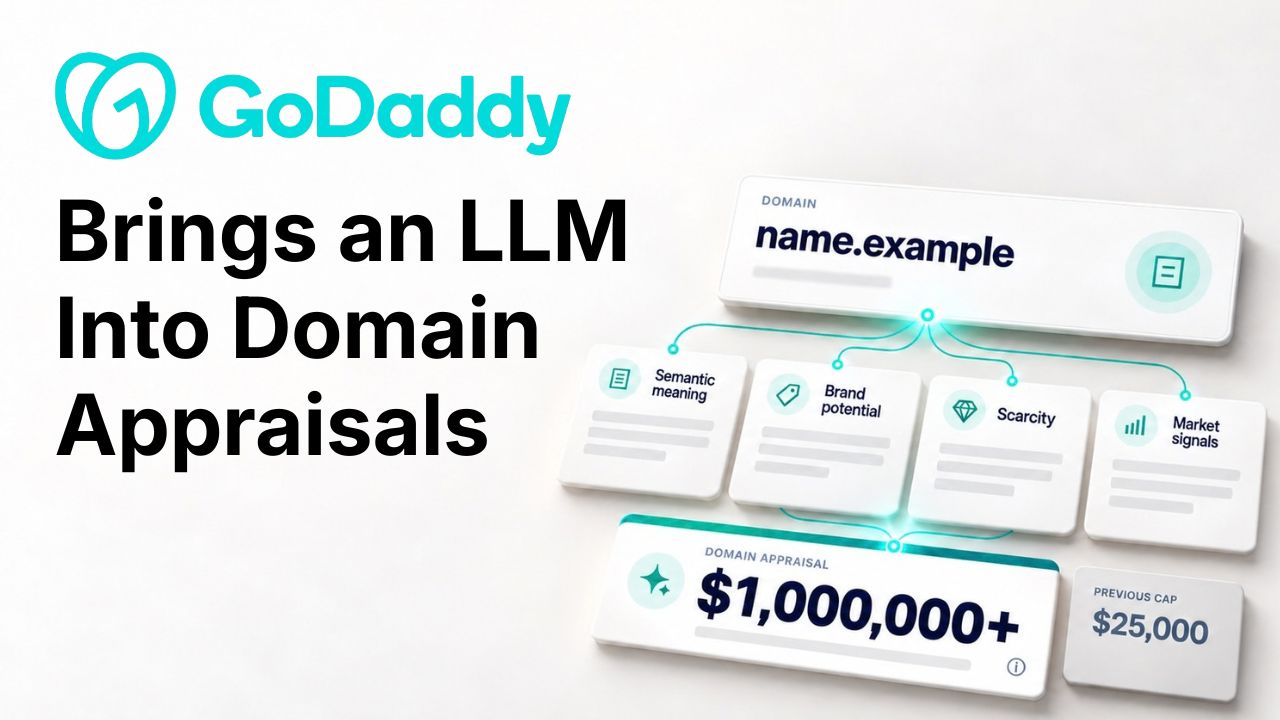
GoDaddy has rebuilt GoValue, the automated appraisal it shows next to domains in its search results, on a new model that includes a large language model. The highest value it will put on a name rises from $25,000 to $1 million. The new values first appeared on the GoValue page in late August, have covered all GoDaddy search traffic since September and are now reaching GoDaddy’s marketplace Afternic.
Beyond its own page, GoValue also powers GoDaddy Auctions appraisals and Domain Academy bulk valuations. Under the old ceiling, any name the model valued at $25,000 or more showed the same figure. The October 8 announcement explains the change: “This gives the model more room to distinguish between high-value domains that previously reached the same ceiling.”
Key facts
- Above the cap: names valued at more than $1 million are shown as “$1,000,000+.”
- The build: started in November 2025 and built over nine months, with a model trained on what GoDaddy calls “hundreds of thousands of data points,” tested internally from June 2026.
- The business: GoDaddy’s aftermarket revenue was $129 million in the second quarter of 2026, up 9 percent and more than a quarter of its $470 million in domain revenue, according to Domain Name Wire.
- Still missing: comparable sales are not shown with the new appraisals yet. GoDaddy plans to add them in places such as Auctions and Afternic.
What the Model Weighs
GoDaddy lists some of the signals the new model is trained on:
- An LLM layer that interprets a name’s context, including its potential as a brand.
- Semantic signals: what the words mean and how they work together.
- Scarcity: how rare a name or its characteristics are.
- Web presence: keyword usage, extensions in use and company usage.
- Market and trend signals, such as the interest in .ai domains.
In GoDaddy’s description, the LLM layer gives GoValue a sense of context the previous model did not have, which matters for “names whose appeal depends on the ideas or associations they carry.” On extensions, the company adds a limit of its own: “An extension alone does not determine a domain’s value.”
Early numbers point upward. When the new values appeared on August 27, Domain Name Wire reported a median increase of more than 11 times across about 40 of its editor’s names, one .ai domain rising from under $100 to close to $60,000. The batch leaned toward the names most likely to gain, such as one-word, .ai and .io domains, and some portfolios may see little change or lower values.
Where Buyers See It
In GoDaddy search, the appraisal appears next to domains available for new registration and next to eligible Afternic listings. For a listing, it is shown only when the appraised value is higher than the seller’s Buy Now price. If no Buy Now price is set, it is shown only when the minimum offer is below the appraisal.
For Afternic sellers, this is where the new ceiling counts. A $25,000 cap could never exceed a Buy Now price of $25,000 or more, so with the higher ceiling pricier listings can qualify as well, provided GoValue’s appraisal is above the seller’s price.
GoDaddy presents GoValue as one input rather than a price. The post is explicit on that point: “It can help inform a decision, but it cannot guarantee what a particular buyer will pay.” At NameFind, GoDaddy’s own domain portfolio, the appraisal is used alongside inbound offers, views and searches.
API and Bulk Valuations Move Over in the Fourth Quarter
For investors managing large domain portfolios, the switch is not complete yet. GoDaddy’s summary lists the new model on Afternic domain details pages already, while its rollout table puts Afternic in the fourth quarter, alongside Domain Academy bulk valuations, the GoValue API, GoDaddy Auctions and Portfolio Manager. During the transition, the same domain could receive different appraisals depending on whether it is checked through GoDaddy search, the API or a bulk valuation tool.
